
- Introduction: The Creative Landscape in Flux
- Which Creative Fields Are Most Affected?
- Meet the Disruptors: Key Generative AI Tools
- The ‘Threat’ Narrative: Fears Surrounding the AI Impact on Creative Jobs
- The ‘Opportunity’ Narrative: AI as Creative Co-Pilot
- How Creatives Are Using AI *Right Now*
- Navigating the Murky Waters: Ethics and Copyright
- Skills for Survival: Adapting to the AI Shift
- Conclusion: Reframing the AI Impact on Creative Jobs
Introduction: The Creative Landscape in Flux
The potential AI impact on creative jobs is arguably one of the most fiercely debated topics across online forums, social media, and industry conferences right now. From graphic designers and illustrators grappling with AI image generators to writers and musicians experimenting with AI text and composition tools, there’s a palpable mix of excitement, anxiety, and outright confusion swirling around. As someone who works closely with creative professionals, I’ve witnessed firsthand the visceral reactions – the fear of obsolescence clashing with the curiosity about new possibilities. Is generative AI a job-killer poised to automate artistry, or is it a powerful new tool that will augment human creativity and unlock new potentials?
This isn’t just theoretical anymore. Tools like Midjourney, Stable Diffusion, ChatGPT, and Suno are rapidly evolving from novelties into capable systems being actively explored (and sometimes deployed) within creative workflows. The conversation has shifted from “if” to “how” and “how fast.” Understanding the nuances of this transformation is crucial for anyone working in or aspiring to join the creative industry.
Which Creative Fields Are Most Affected?
When we talk about the creative industry in the context of AI, the impact isn’t uniform. Some fields are feeling the heat more intensely than others right now. Key areas include:
- Visual Arts & Design: Graphic designers, illustrators, concept artists, photographers, and stock image creators are directly impacted by AI image generation tools capable of producing high-quality visuals from text prompts.
- Writing & Content Creation: Copywriters, content marketers, journalists, translators, and even fiction writers are seeing AI tools that can draft articles, generate marketing copy, translate languages, and brainstorm ideas.
- Music & Audio Production: Musicians, composers, and sound designers are encountering AI that can generate royalty-free music, create sound effects, or even mimic specific musical styles.
- Video & Animation: While still nascent compared to image and text, AI video generation tools (like OpenAI’s Sora) signal potential disruption for videographers, animators, and visual effects artists.
- Voice Acting: AI voice synthesis technology is becoming increasingly sophisticated, posing challenges for voice actors in areas like audiobooks, commercials, and character voicing.
Essentially, any creative role involving the generation of novel content based on patterns, styles, or data is potentially subject to AI influence, whether as a tool, a competitor, or both.
Meet the Disruptors: Key Generative AI Tools
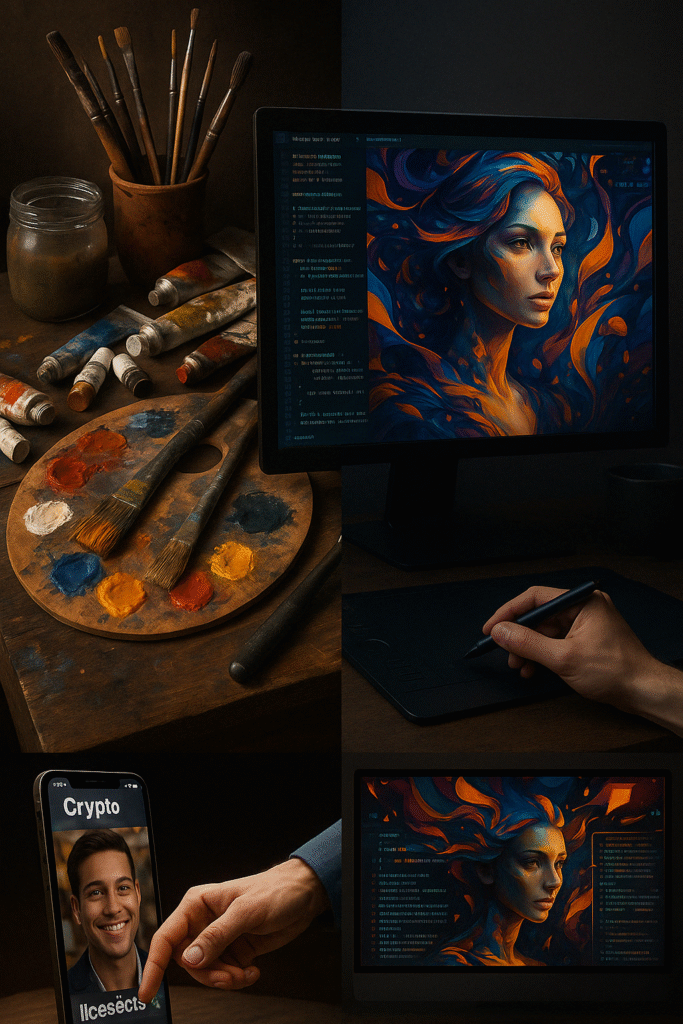
The engine driving this change is **generative AI**. These AI models learn patterns and structures from vast datasets (text, images, audio) and then use that knowledge to generate entirely new content. Some prominent examples creatives are encountering include:
- Image Generators: Midjourney, Stable Diffusion, DALL-E 3. These tools turn text descriptions (“prompts”) into detailed images in various styles.
- Text Generators: ChatGPT (OpenAI), Claude (Anthropic), Gemini (Google). Used for drafting text, brainstorming, summarizing, coding assistance, and more.
- Music Generators: Suno AI, Amper Music, Google’s MusicLM. Create instrumental tracks, melodies, or even songs with vocals based on prompts.
- Video Generators: OpenAI’s Sora (currently limited access), Runway Gen-2, Pika Labs. Generate short video clips from text or image inputs.
- Voice Synthesis: ElevenLabs, Descript. Create realistic synthetic voices or clone existing ones (with ethical considerations).
The rapid improvement and increasing accessibility of these **AI tools** are key reasons why the discussion around the AI impact on creative jobs has intensified so dramatically in the past couple of years.
The ‘Threat’ Narrative: Fears Surrounding the AI Impact on Creative Jobs
Let’s address the elephant in the room: the fear. Many creatives worry that AI will devalue their skills and lead to significant **job displacement**. This anxiety stems from several key concerns often voiced on platforms like Reddit’s r/ArtistLounge or writing forums:
- Automation of Tasks: AI can now perform tasks that were once the exclusive domain of human creatives, such as generating blog post drafts, creating stock photos, designing logos, or composing background music, often faster and cheaper.
- Downward Pressure on Pricing: If clients can get “good enough” creative work from an AI for a fraction of the cost, will they still be willing to pay professional rates for human creators? This is a major concern for freelancers.
- Skill Devaluation: There’s a worry that years spent honing craft skills (like drawing, writing prose, or mastering design software) could become less valuable if AI can approximate the output.
- Homogenization of Content: If everyone uses the same AI tools trained on similar data, will creative output become bland, generic, and lacking unique human perspective?
- The “Good Enough” Problem: For some clients or projects, AI-generated content might be deemed sufficient, even if it lacks the depth, nuance, or originality of human work, particularly for lower-stakes content.
These fears aren’t entirely unfounded. We are already seeing shifts in demand for certain types of creative work, particularly at the lower end of the market (e.g., basic logo design, generic blog content). Ignoring this anxiety would be naive.
The ‘Opportunity’ Narrative: AI as Creative Co-Pilot
However, there’s a counter-narrative gaining traction: AI as an augmentation tool, a powerful assistant that can enhance human creativity rather than replace it entirely. From this perspective, AI offers several potential benefits:
- Boosting Productivity: AI can automate tedious tasks (like background removal, initial drafting, research gathering, code generation), freeing up creatives to focus on higher-level strategic thinking and ideation. Think of it as handling the grunt work.
- Overcoming Creative Blocks: AI tools can be excellent brainstorming partners, generating ideas, exploring different visual styles, or suggesting alternative phrasing when you’re stuck.
- New Creative Possibilities: AI enables the creation of novel art forms, interactive experiences, and personalized content that might have been impossible or prohibitively expensive before.
- Enhanced Accessibility: AI tools can potentially lower the barrier to entry for some creative tasks, allowing individuals with less technical skill to bring their ideas to life (though mastery still requires skill).
- Personalization at Scale: AI can help tailor creative content to individual user preferences in ways that are difficult to achieve manually.
In this view, the successful creative of the future isn’t replaced by AI but is the one who effectively *leverages* AI. It becomes another tool in the toolkit, like Photoshop or a synthesizer. My own experience using AI for brainstorming has certainly sped up certain parts of the content creation process.
How Creatives Are Using AI *Right Now*
Beyond the hype and fear, how is AI actually being integrated today?
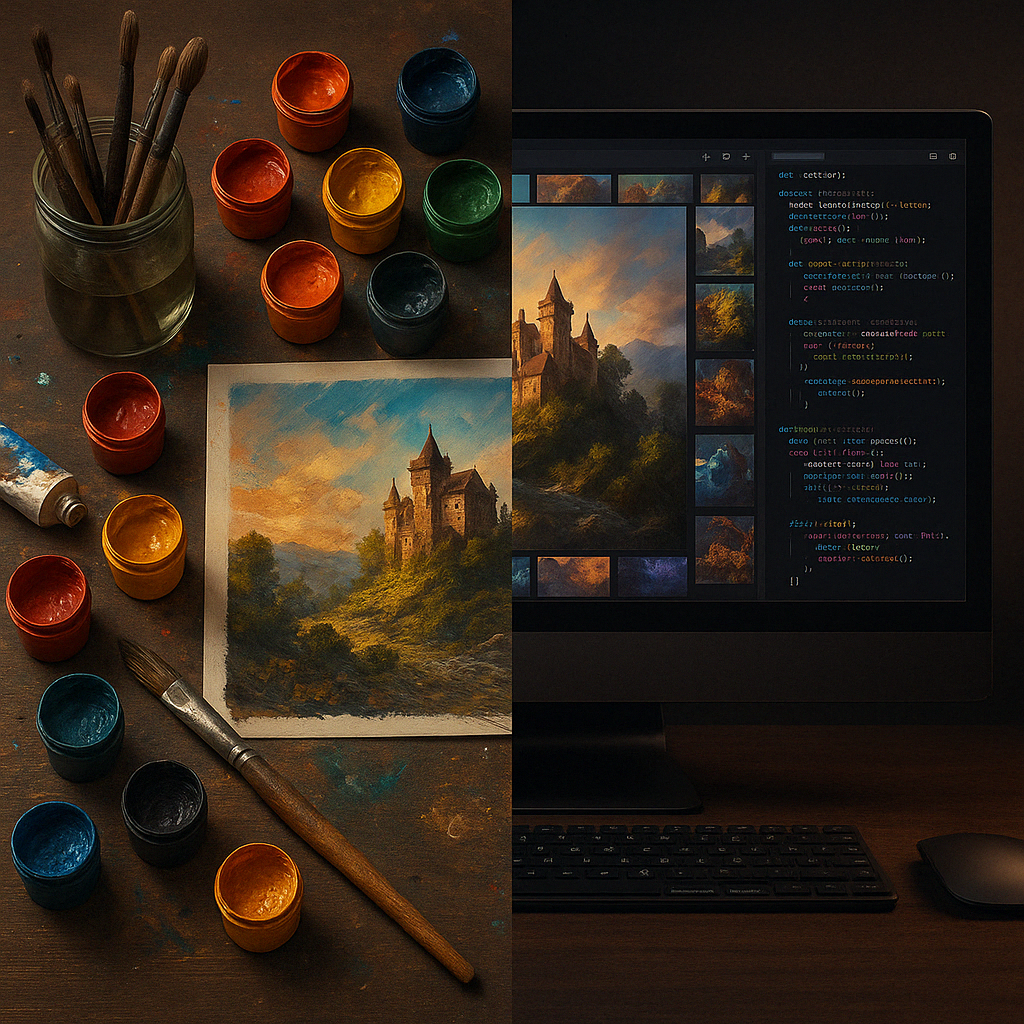
- Concept Art & Mood Boarding: Game studios and designers use AI image generators to quickly visualize ideas and explore different aesthetics early in the design process.
- Copywriting Assistance: Marketers and writers use AI tools to draft emails, social media posts, product descriptions, or overcome writer’s block, often heavily editing the output.
- Image Editing & Upscaling: AI-powered features in software like Adobe Photoshop automate tasks like object selection, background removal, noise reduction, and image enhancement.
- Music for Content: YouTubers and small businesses use AI music generators to create royalty-free background tracks for videos or podcasts.
- Coding for Designers/Artists: Creatives with limited coding skills use AI to help generate simple code snippets for websites or interactive projects.
It’s often about efficiency gains and idea generation rather than full replacement. For instance, a designer might use Midjourney to generate 20 initial logo concepts in minutes, then use their expertise to refine the best ones or develop a completely original idea inspired by the AI output. This integration represents a significant shift in workflow for many in the **creative industry**.
Navigating the Murky Waters: Ethics and Copyright
This is perhaps the thorniest aspect of the AI revolution in creative fields. Key issues dominate the discussion:
- Training Data & Consent: Many generative AI models were trained on vast datasets scraped from the internet, often including copyrighted images and text without the explicit consent of the original creators. This has led to accusations of mass copyright infringement and ongoing lawsuits.
- Copyrightability of AI Output: Can AI-generated work be copyrighted? The US Copyright Office and courts globally are grappling with this. Current guidance often suggests that works created *solely* by AI without significant human authorship may not qualify for copyright protection (learn more at Copyright.gov’s AI page).
- Style Imitation: AI can mimic the style of specific artists with alarming accuracy, raising concerns about artistic identity theft and unfair competition.
- Authenticity & Disclosure: Should creators disclose when AI tools have been used in their work? Transparency is becoming a major point of discussion for maintaining trust with audiences and clients.
- Bias in AI: AI models can perpetuate biases present in their training data, leading to stereotypical or non-representative outputs.
These ethical and legal gray areas create uncertainty and risk for both creators using AI and those whose work might be used to train AI models. Resolving these issues will be critical for the responsible integration of AI into creative workflows.
Skills for Survival: Adapting to the AI Shift
So, what can creatives do to navigate this changing landscape? Standing still isn’t an option. Adaptation is key:
- Develop “AI Literacy”: Understand how different AI tools work, their strengths, weaknesses, and ethical implications. Experiment with them.
- Master Prompt Engineering: Learning how to effectively communicate with AI tools to get desired results is becoming a valuable skill in itself.
- Focus on Uniquely Human Skills: Emphasize critical thinking, strategic oversight, emotional intelligence, complex problem-solving, client communication, project management, and personal artistic voice – things AI currently struggles with.
- Lean into Curation & Strategy: The ability to guide AI, select the best outputs, and integrate them strategically into a larger creative vision will be crucial.
- Specialize in Niche Areas: Deep expertise in a specific style, subject matter, or complex workflow might offer more protection than generalist roles.
- Build a Strong Personal Brand: Clients may increasingly hire creatives for their unique perspective, reputation, and reliability, not just their technical output.
- Advocate for Ethical Practices: Participate in discussions around fair compensation, copyright reform, and responsible AI development.
Think of it as evolving from pure “creator” to “creative director” or “AI collaborator.” The future likely belongs to those who can blend human ingenuity with AI capabilities, navigating the broader future of work.

Conclusion: Reframing the AI Impact on Creative Jobs
The ongoing **AI impact on creative jobs** is complex, multifaceted, and far from settled. While fears of widespread **job displacement** due to **automation** are understandable given the power of new **generative AI** tools, the reality is likely to be more nuanced. History shows that technological disruptions often change job roles rather than eliminating entire fields outright. We’re likely witnessing an evolution, potentially painful for some, but also unlocking new efficiencies and creative avenues.
From my vantage point, the key lies in adaptation and focusing on value that AI cannot replicate: strategic vision, emotional depth, ethical judgment, and unique personal style. The **AI impact on creative jobs** forces us to redefine what it means to be creative in the 21st century. Rather than just panic, perhaps the most productive response is critical engagement – learning the tools, understanding the risks, advocating for ethical frameworks, and ultimately, harnessing AI to augment, not surrender, human creativity.