
Angus King III: Following a Familiar Path in Maine Politics
- Introduction: A New Chapter for a Familiar Name
- Early Life and Education: Setting the Stage
- Career Before Politics: Energy and Problem-Solving
- Entering the Political Arena: A Gubernatorial Bid
- Platform and Priorities: Addressing Maine’s Challenges
- The Family Legacy: Navigating a Well-Known Name
- The Political Landscape: The Road Ahead
- Conclusion: Angus King III and the Future of Maine
Angus King III, the son of Maine’s independent U.S. Senator Angus King, recently announced his campaign for governor, marking a significant step for a familiar name in Maine politics. It’s interesting to see a new generation of the King family stepping into the political spotlight. Growing up in Maine, the name “Angus King” has always been associated with a pragmatic, independent approach to governance, and now we’re seeing the next chapter unfold. This move by Angus King III has certainly captured the attention of political observers and residents alike, raising questions about how his path might mirror or diverge from his father’s influential career.
Early Life and Education: Setting the Stage
Angus King III was born into a family with deep roots in public service. His father, Angus Stanley King Jr., served two terms as Maine’s governor before being elected to the U.S. Senate as an independent. While details about Angus King III’s earliest years are less widely publicized than his father’s, we know he attended Dartmouth College, his father’s alma mater, graduating in 1993. Following his time at Dartmouth, he worked at the consultancy Bain and Company. My personal experience with Bain and Company through colleagues suggests a rigorous, analytical environment, which likely provided him with a strong foundation in problem-solving and strategic thinking. He also spent time in Washington D.C., working as an assistant to the chief of staff in former President Bill Clinton’s White House. This early exposure to high-level government operations would have offered invaluable insights into the workings of federal policy and administration.
Career Before Politics: Energy and Problem-Solving
Before launching his gubernatorial campaign, Angus King III built a career in the renewable energy sector. He returned to Maine in 2002 and held various positions within the industry. Most recently, he served as the president of Peaks Renewables, a company involved in developing renewable energy projects. One notable initiative he spearheaded at Peaks Renewables was a project to produce natural gas from cow manure in Clinton, Maine. This kind of innovative approach to energy generation aligns with a growing focus on sustainable solutions, and I’ve seen firsthand in my community the increasing interest in such projects. This background suggests a practical, hands-on approach to tackling complex issues, focusing on tangible outcomes and building things that “solve problems and help people,” as he has stated.
This focus on energy and infrastructure is a key area of his professional life outside of traditional politics. It’s a different path than his father, who had a background in law and media before entering politics. The younger King’s experience in the private sector, particularly in a field like renewable energy, could bring a unique perspective to the challenges facing Maine, such as energy costs and environmental sustainability. It highlights a commitment to practical solutions and building projects that have a real-world impact.
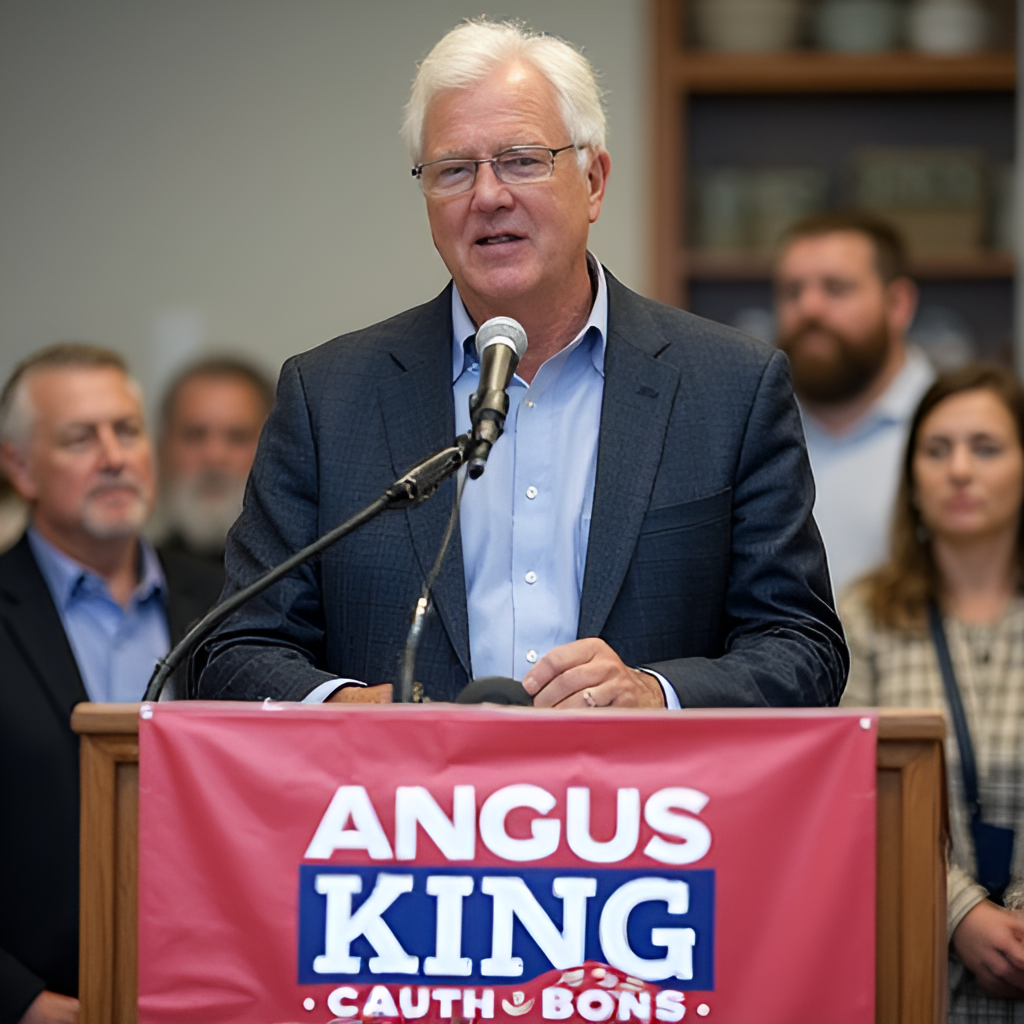
This image is a fictional image generated by GlobalTrendHub.
Entering the Political Arena: A Gubernatorial Bid
Angus King III officially announced his candidacy for Governor of Maine in 2026. This marks his first bid for public office. Unlike his father, who ran as an independent, Angus King III is seeking the Democratic nomination. This is a significant departure from his father’s political branding and is a point of interest for many observers. His father, Senator Angus King, has long been known for his independent stance, often caucusing with Democrats but maintaining a distinct political identity. The decision by Angus King III to run as a Democrat suggests a potential alignment with the party’s platform and priorities, though he has also emphasized having “independent blood in [his] veins” and a belief in being “pragmatic” and “moderate.”
The upcoming Democratic primary for the gubernatorial race could be competitive. As of his announcement, other potential candidates were emerging, including Secretary of State Shenna Bellows. The political landscape in Maine is dynamic, and the primary contest will be an important test for Angus King III’s campaign and his ability to connect with Democratic voters across the state.
Platform and Priorities: Addressing Maine’s Challenges
In announcing his campaign, Angus King III has begun to outline his priorities for Maine. He has highlighted the challenges facing Mainers, including rising costs and the housing affordability crisis. His background in the private sector, particularly in the energy industry, informs his focus on economic issues and the need to make it easier for small businesses to operate in the state. He speaks of building the economy through innovation and hard work.
These issues resonate deeply with many people in Maine. The increasing cost of living, particularly housing, is a frequent topic of conversation and a significant concern for families and individuals across the state. Addressing these challenges will require thoughtful policy and a willingness to collaborate on solutions, something Angus King III suggests his background in building consensus can help achieve. My own experience living in Maine has shown me how interconnected these issues are – the cost of energy impacts business, which in turn affects job opportunities and the overall economic health of communities.

This image is a fictional image generated by GlobalTrendHub.
The Family Legacy: Navigating a Well-Known Name
Having a well-known parent in politics can be both an advantage and a challenge. Angus King III benefits from instant name recognition in Maine. His father served two terms as a popular governor before his time in the Senate, leaving a significant legacy. Senator Angus King has expressed support for his son’s gubernatorial bid, even lightheartedly stating that Angus King III would be “one of the top two governors named Angus ever.”
However, running as the son of a prominent political figure also brings scrutiny and expectations. Voters will naturally compare his approach and policy positions to his father’s. While he shares a name and a connection to his father’s legacy, Angus King III is seeking to establish his own political identity and demonstrate his qualifications based on his own experiences and vision for Maine. He has explicitly stated his decision to run as a Democrat, distinguishing his partisan affiliation from his father’s independent status. This suggests a desire to forge his own path while still acknowledging the influence of his upbringing and his father’s career.
The Political Landscape: The Road Ahead
The 2026 Maine gubernatorial race is shaping up to be an interesting contest. With Governor Janet Mills being term-limited, the field is open. Angus King III’s entry adds a prominent name to the list of potential candidates vying for the Democratic nomination. The primary will be a crucial test of his ability to build a coalition of support within the party and articulate a compelling vision for the state’s future. Winning the primary would then lead to the general election, where he would face the Republican nominee and potentially independent candidates, echoing the kind of multi-candidate races his father faced.
The independent streak in Maine politics is well-documented, and voters often consider candidates outside the two major parties. While Angus King III is running as a Democrat, his emphasis on being pragmatic and moderate, and his acknowledgment of his “independent blood,” may be an attempt to appeal to that segment of the electorate. The dynamics of the primary and general elections will depend on various factors, including the strength of other candidates, the key issues dominating the campaign, and the ability of each candidate to effectively communicate their message to voters across Maine.
Conclusion: Angus King III and the Future of Maine
Angus King III’s decision to run for Governor of Maine marks a significant moment in the state’s political landscape. With a background in the renewable energy sector and a famous last name, he brings a unique set of experiences and a degree of name recognition to the race. While he is charting his own course by seeking the Democratic nomination, the legacy of his father, Senator Angus King, will undoubtedly be a factor in the campaign. As Angus King III articulates his vision for addressing Maine’s challenges, voters will be evaluating his platform, his experience, and his ability to lead the state into the future. The coming months will reveal more about his campaign and how he plans to distinguish himself in what is likely to be a competitive election.