
AEP: Unifying Customer Experiences for Modern Business
- Introduction to AEP and Customer Experience Orchestration
- What Exactly is Adobe Experience Platform (AEP)?
- AEP vs. CDP: Understanding the Nuances
- Core Capabilities that Drive AEP’s Power
- Unlocking Business Value: The Benefits of Adopting AEP
- Navigating the Hurdles: Common AEP Implementation Challenges
- AEP in Action: Real-World Use Cases
- The Future of Customer Experience is Unified with AEP
AEP: Unifying customer experiences for modern business is more than just a catchy phrase; it’s the core promise of Adobe Experience Platform. In my journey through the ever-evolving landscape of digital marketing and customer data, I’ve seen firsthand the challenges businesses face in creating truly connected and personalized customer journeys. It’s like trying to conduct an orchestra where every musician is playing from a different sheet of music! This is precisely where AEP steps in, aiming to bring harmony to the chaos of customer data and interactions. Let’s dive into what makes AEP a game-changer for businesses striving to deliver exceptional customer experiences at scale.
What Exactly is Adobe Experience Platform (AEP)?
So, what exactly is AEP? At its heart, Adobe Experience Platform is an enterprise-grade platform designed to power unified customer experiences. It’s not just a single tool, but rather a foundational layer with shared, composable capabilities that support a wide range of applications within the Adobe Experience Cloud. Think of it as the central nervous system for your customer data, pulling in information from various sources – online, offline, CRM, and more – to create a single, comprehensive view of each customer.
My experience working with different data platforms has shown me that the ability to unify disparate data sources is a critical differentiator. Many companies struggle with data silos, where valuable customer information is locked away in separate systems, making it nearly impossible to get a holistic understanding of the customer journey. AEP is built from the ground up to address this challenge, providing a secure and scalable environment for data ingestion, standardization, and unification.
AEP provides shared, composable, and AI-supported capabilities for data unification, insight generation, and more. These capabilities empower marketing teams to make data-driven decisions quickly and orchestrate individual customer experiences in real-time.
AEP vs. CDP: Understanding the Nuances
It’s easy to get AEP and Customer Data Platforms (CDPs) confused, as they both deal with customer data. However, AEP is more than just a CDP. While a CDP focuses primarily on unifying known and unknown customer data to create real-time dynamic customer profiles for activation, AEP provides the broader foundational platform, services, and applications upon which a real-time CDP, like Adobe Real-Time CDP, is built.
Think of Real-Time CDP as a key application within the AEP ecosystem, specifically tailored for marketers to deliver personalized experiences by understanding full customer profiles.
CDPs, in general, have become increasingly popular in the marketing industry for their promise to bring relevant data together in real-time for instant personalization. AEP is Adobe’s comprehensive answer to this market demand, serving as a central place for all Adobe marketing products to share data.
Synonyms for customer data platform include “customer data management platform” and “cloud-based customer data platform.”
Core Capabilities that Drive AEP’s Power
What makes AEP so powerful? It’s the suite of integrated capabilities that work together to transform raw data into actionable customer insights and personalized experiences. Some of the core capabilities include:
- Real-Time Data Collection: AEP seamlessly gathers and standardizes data across all channels, keeping information up-to-date and reducing reliance on third-party cookies. This is crucial for responding to customer behavior in the moment.
- Data Management & Unification: The platform ingests, organizes, and stores customer data for both real-time and batch processes. This unification creates a single source of truth for customer data.
- Real-Time Customer Profile: This is a hallmark feature of AEP, stitching together fragments of customer data from different interactions, devices, and channels into a unified, real-time profile.
- AI-Driven Insights: Leveraging Adobe Sensei, AEP analyzes vast amounts of data to provide actionable insights, predict customer behavior, and optimize experiences.
- Data Governance & Privacy: AEP includes robust data governance features, ensuring data is used responsibly and in compliance with privacy regulations. This is a non-negotiable in today’s data-conscious world.
- Extensibility: With an open architecture and APIs, AEP allows for easy connection to existing systems and supports custom solutions.
- Customer Journey Analytics (CJA): Built on AEP, CJA provides cross-channel analysis and omnichannel insights into customer journeys.
From my perspective, the real magic happens when these capabilities work in concert. It’s not just about collecting data; it’s about connecting it, understanding it through AI, and then acting on it in real-time to create truly personalized interactions.
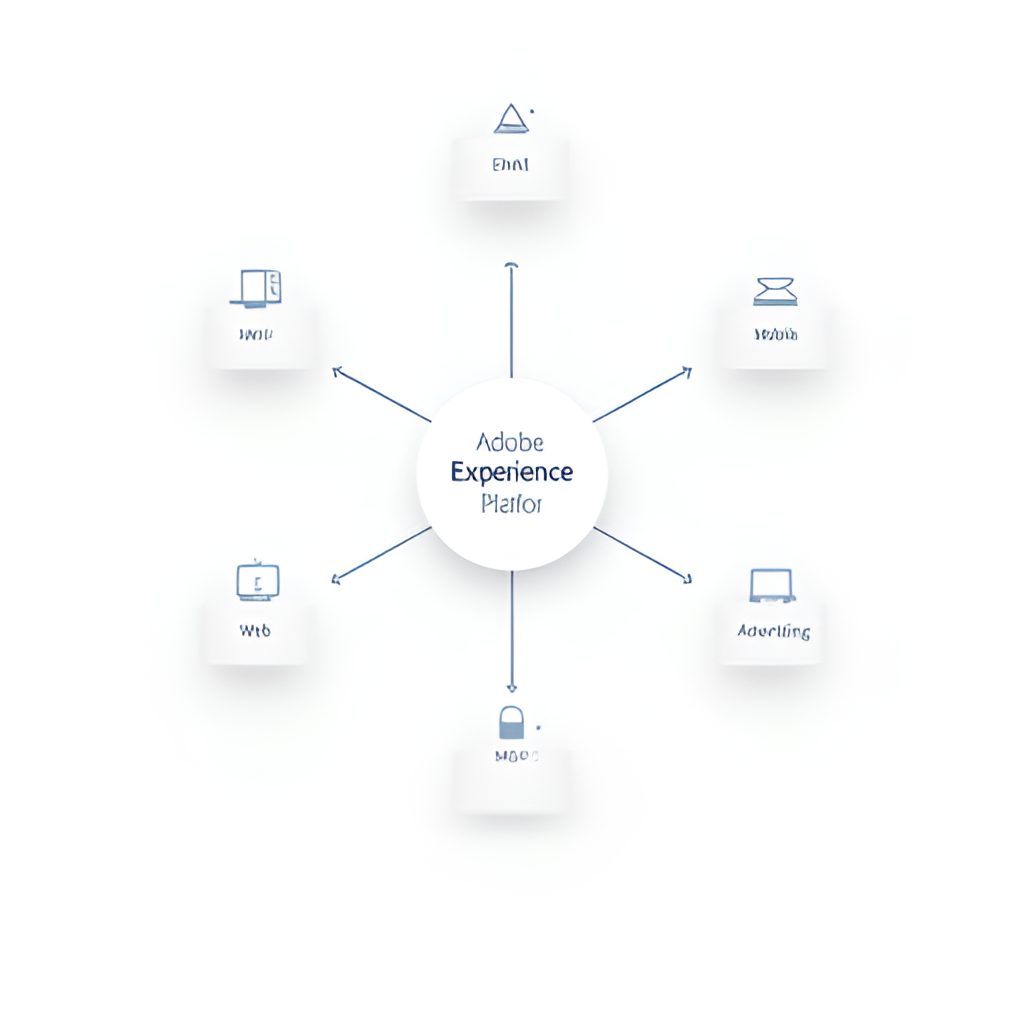
This image is a fictional image generated by GlobalTrendHub.
Unlocking Business Value: The Benefits of Adopting AEP
Implementing AEP can bring significant benefits to businesses looking to enhance their customer experience and drive growth. Some of the key advantages I’ve observed include:
- Enhanced Customer Experience: AEP enables businesses to deliver personalized and consistent experiences across all touchpoints, meeting modern customer expectations for tailored interactions.
- Improved Decision-Making: Unified customer data and real-time processing capabilities lead to faster, more informed decisions and better business outcomes.
- Increased Efficiency and Collaboration: A unified data platform fosters better collaboration across different departments, breaking down data silos.
- Faster Time to Market: A better understanding of customers allows businesses to act quickly, whether launching new products or responding to feedback.
- Optimized Marketing Campaigns: AEP empowers marketers to manage and optimize campaigns across various channels consistently, leading to improved performance and ROI.
These benefits aren’t just theoretical. Companies using CDPs, which AEP underpins, have reported a reduction in customer acquisition costs and an improvement in customer satisfaction scores.
Navigating the Hurdles: Common AEP Implementation Challenges
While the benefits of AEP are clear, implementing the platform can come with its share of challenges. Based on my experience and research, some common hurdles include:
- Data Integration Complexities: Dealing with data housed in different systems and ensuring seamless integration can be complex. Organizations often have customer data scattered across various platforms, making a complete view difficult.
- Data Quality and Governance Issues: Ensuring data quality and implementing robust data governance practices are crucial but can be challenging.
- Aligning AEP Capabilities with Business Goals: Clearly defining use cases and aligning the platform’s capabilities with specific business objectives is essential for success.
- Organizational Readiness: Companies may not be fully prepared to adapt to a CDP, especially regarding changing processes and ensuring teams have the necessary skills.
- Integrating with Existing Systems: While AEP is designed for extensibility, integrating it into an existing complex tech stack can be a hassle.
- Understanding Licensing: Adobe Experience Cloud licensing can be tricky; understanding the nuances is important for budgeting and strategy.
Overcoming these challenges requires strategic planning, strong technical know-how, and commitment from everyone involved. Focusing on clear, impactful use cases and fostering collaboration across teams are key strategies for a successful AEP implementation.
AEP in Action: Real-World Use Cases
Seeing AEP in action truly highlights its transformative potential. Here are a couple of real-world examples demonstrating how businesses are leveraging the platform:
“A B2B wholesaler used Adobe Experience Platform to analyze consolidated customer data (e.g., purchase history and order frequency) identifying at-risk segments such as customers inactive for 30-60 days. Real-time CDP enabled automated campaigns, offering high-value audiences like those at risk of churn but with strong relationships (e.g., high LTV, frequent orders), discounts or VIP incentives to boost retention.”
“A telecom company leverages Adobe Experience Platform to unify customer data, combining known and anonymous insights (e.g., age, purchase behavior, etc.). Adobe’s real-time CDP identifies high-intent behaviors, such as browsing but not purchasing mobile plans and enables personalized recommendations such as product bundles (e.g., discounts for mobile and internet).”
These examples showcase AEP’s ability to move beyond basic data collection to enable sophisticated segmentation, predictive analysis, and personalized engagement based on real-time insights.

This image is a fictional image generated by GlobalTrendHub.
From my own observations, companies that successfully implement AEP are those that start with clear, manageable projects and build momentum over time. Quick wins, like personalized email campaigns, can demonstrate value early on and pave the way for broader adoption.
The Future of Customer Experience is Unified with AEP
In conclusion, AEP is a powerful platform that addresses the fundamental need for businesses to unify customer data and deliver personalized experiences at scale. While implementing AEP presents challenges, the benefits in terms of enhanced customer experience, improved decision-making, and increased efficiency make it a compelling solution for modern businesses. As someone who has navigated the complexities of customer data management, I firmly believe that AEP: Unifying customer experiences for modern business is not just a goal, but a necessary step for companies looking to thrive in the digital age. The ability to create a single source of truth for customer data and activate real-time insights is no longer a luxury; it’s a requirement for building lasting customer relationships and driving sustainable growth.