
Uber Ride-Sharing: Your Guide to Getting Around
- Introduction to the World of Uber Ride-Sharing
- Understanding How the Uber App Connects You
- The Advantages of Using Uber for Transportation
- Exploring Opportunities as an Uber Driver
- Uber’s Influence on Urban Mobility and Traffic
- Navigating the Hurdles: Issues Facing Uber
- What’s Next? The Evolution of Ride-Hailing
- Frequently Asked Questions About Uber
- Uber Ride-Sharing: A Look Back and Forward
Uber ride-sharing has fundamentally changed how many of us navigate our cities and beyond. It’s hard to remember a time before simply tapping a button on your phone could summon a ride within minutes. In my own experience, the shift from relying solely on traditional taxis or public transport to using this popular ride-hailing service felt like stepping into the future. Think about it: no more standing on a street corner, hoping a cab drives by, or struggling to figure out complex bus routes in an unfamiliar place. Uber made transportation incredibly accessible, almost on-demand. This article delves into the world of Uber, exploring how it works, its impact, and what the future might hold for this ubiquitous service.
Understanding exactly how the Uber app functions is key to appreciating its simplicity and power. At its core, it’s a platform that uses GPS technology to connect people who need a ride with drivers willing to provide one. When you open the app and enter your destination, the system works its magic, finding a nearby driver and showing you their location on a map. It’s a seamless process, designed for convenience. You see the driver’s name, photo, vehicle type, and license plate number right there in the app, which is a great safety feature, if you ask me.
Using the Uber App: A Step-by-Step
Getting started with Uber is pretty straightforward. First, you download the app and create an account. All you really need is an email address and phone number, plus a valid payment method like a credit card or PayPal. My first time setting it up felt surprisingly simple. Once you’re logged in and location services are enabled on your phone , you just tap “Where to?” and type in your desired address.
- Enter your destination in the “Where to?” field.
- Choose the type of ride you want (UberX, UberXL, etc.). You’ll see the estimated fare and wait time.
- Confirm your pickup location. The app usually uses your current location, but you can adjust the pin if needed.
- Tap “Request” and wait for a driver to accept your trip.
- Once a driver accepts, you can see their location on the map and their estimated time of arrival. You also see their car details and rating – always double-check these match the car that arrives.
Payment is handled automatically through the app using the payment method you linked to your account, so there’s no fumbling for cash or cards when you arrive. After the ride, you get a receipt via email and the option to rate your driver, which is a crucial part of the system’s quality control.
The advantages of using Uber for transportation are pretty clear to anyone who’s tried it. For riders, the convenience is probably the biggest draw. You can get a ride almost anywhere, often faster than waiting for a traditional taxi or navigating public transport, especially late at night. Plus, you don’t have to worry about parking, which is a huge benefit in busy city centers.
Convenience and Cost Savings with Uber Transportation
Beyond just being easy to use, Uber transportation can also offer cost savings, particularly when compared to car ownership in urban areas. When you factor in insurance, maintenance, fuel, and parking, using a service like Uber for occasional trips can definitely add up to less than owning a car. For someone living in a city like New York, where parking is a nightmare and public transit is extensive but not always door-to-door, Uber fills a crucial gap. It’s also been highlighted as a way to increase mobility for seniors and people with disabilities.
There’s also the safety aspect. While controversies exist (we’ll touch on those later), the in-app features like GPS tracking, the ability to share your trip status with friends or family, and the driver rating system add layers of security that weren’t always available with traditional methods.
It’s not just riders who benefit; Uber has created a massive ecosystem of drivers. As of early 2025, reports indicate there are over 7.8 million drivers working for Uber globally. For many, driving for Uber offers flexibility – the ability to set their own hours and work as much or as little as they want.
My neighbor, for instance, drives for Uber a few nights a week to supplement his income. He likes being able to choose when he works, fitting it around his main job and family commitments. It’s a classic example of the “gig economy” in action, providing opportunities for supplemental income.
The rise of Uber and similar platforms hasn’t just changed individual travel habits; it’s had a profound impact on urban mobility and city life. On the one hand, ride-hailing services provide convenient, on-demand transportation, potentially reducing the need for personal car ownership in dense areas.
However, the picture isn’t entirely rosy. Research suggests that while Uber might replace some personal car trips, it also replaces trips that people would have otherwise made using public transit, cycling, or walking. This can actually lead to an increase in traffic congestion, particularly in downtown areas. One study found that Uber entry increased traffic congestion and reduced public transit demand more in cities with higher levels of urban compactness. It’s a complex issue with no easy answers, and city planners are still grappling with how to integrate these services effectively.
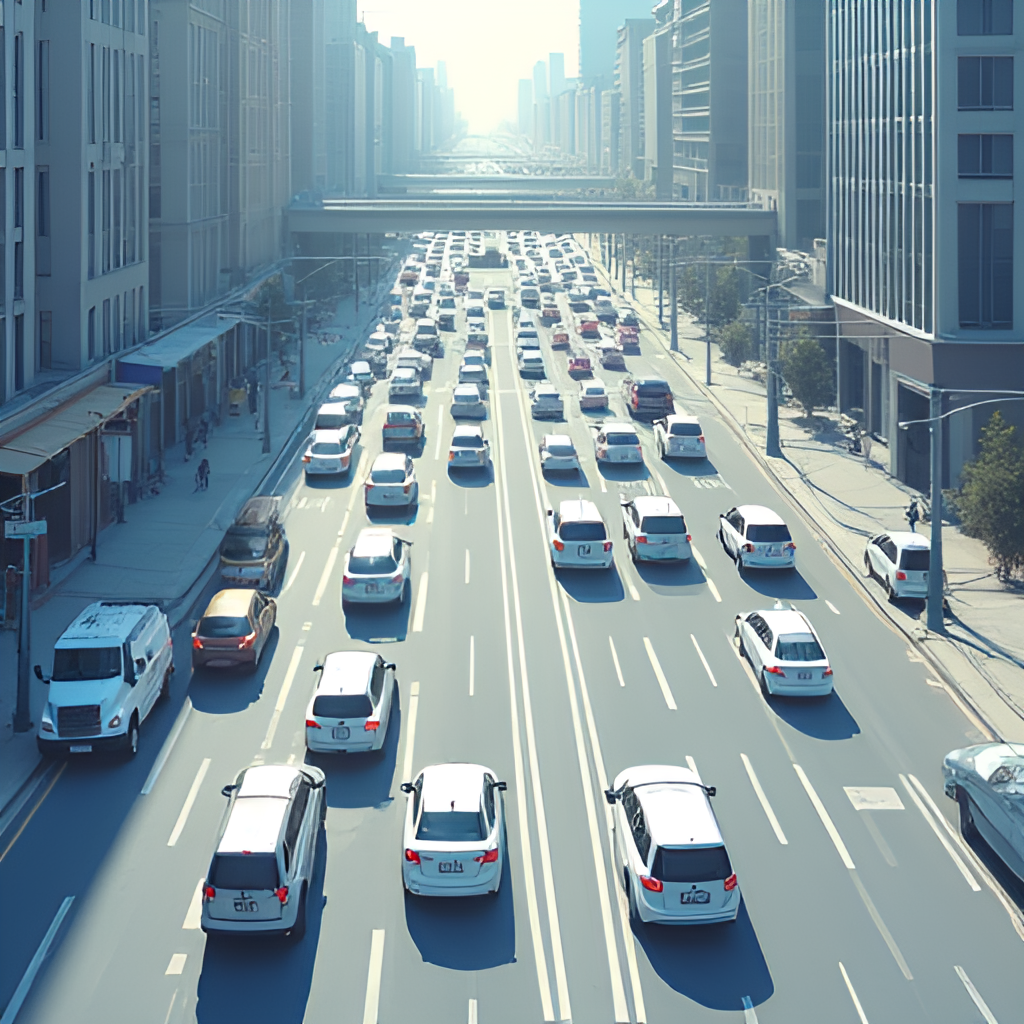
This image is a fictional image generated by GlobalTrendHub.
Like any disruptive technology, Uber hasn’t been without its challenges and controversies. One of the most persistent issues revolves around the classification of drivers as independent contractors rather than employees. This impacts everything from wages and benefits to legal protections.
In February 2021, Britain’s Supreme Court ruled that a group of Uber drivers should be classified as workers entitled to a minimum wage and vacation time.
Regulatory challenges have also plagued the company in many cities and countries, leading to legal battles and sometimes outright bans. Concerns about safety, data privacy, and the impact on traditional taxi services have also been prominent in discussions surrounding Uber.
Then there’s the issue of surge pricing, where fares increase dramatically during times of high demand. While this is intended to incentivize more drivers to come online, it can lead to frustratingly high costs for riders. My friends have definitely complained about paying exorbitant fares on New Year’s Eve or during major events!

This image is a fictional image generated by GlobalTrendHub.
So, what does the future hold for Uber and the broader ride-hailing industry? The company is investing heavily in new technologies, including autonomous vehicles and partnerships with self-driving software operators. We’re already seeing pilot programs for sidewalk robots and autonomous vehicles in some areas for Uber Eats deliveries.
There’s also a continued focus on expanding beyond just passenger rides to include food delivery (Uber Eats is a massive part of their business ) and freight. The industry is constantly evolving, driven by technological advancements and changing consumer expectations.
Here are some frequently asked questions about Uber ride-sharing:
- Is Uber the same as ride-sharing?
- While often used interchangeably, ride-hailing (like most Uber rides) connects a passenger with a driver for a private trip, similar to a taxi. Ride-sharing, on the other hand, specifically refers to sharing a vehicle with other passengers going in the same direction (like UberPool).
- How many people use Uber?
- As of early 2025, Uber had around 161 million monthly active users globally.
- Is Uber available everywhere?
- Uber operates in over 70 countries and hundreds of cities worldwide, but it’s not available in every location.
- How do I pay for an Uber ride?
- Payment is cashless and handled automatically through the Uber app using a linked credit card, PayPal, or other payment method.
In conclusion, Uber ride-sharing has undeniably transformed urban transportation, offering unparalleled convenience and changing commuting habits for millions. While it has faced significant challenges related to regulation, driver classification, and its impact on traffic congestion, its influence on the modern world is undeniable. As someone who’s used the service extensively, I’ve seen firsthand the ease it brings to travel, despite the occasional surge pricing frustration. Looking ahead, Uber continues to innovate, exploring autonomous vehicles and expanding its services, suggesting that this popular ride-hailing service will remain a key player in how we move around in the future. Its journey has been a wild ride, and I’m curious to see where it goes next.