
Karen Read Trial Live: Inside the High-Profile Massachusetts Murder Retrial
- Introduction: Following the Karen Read Trial Live
- The Tragic Incident: Understanding the Karen Read Case Background
- A Look Back: The First Trial and the Hung Jury
- In the Courtroom: What’s Happening in the Karen Read Trial Live
- Crucial Evidence in the Spotlight
- Clashing Narratives: Defense Strategy vs. Prosecution Case
- Navigating the Massachusetts Criminal Justice System
- The ‘Free Karen Read’ Movement and Public Interest
- Looking Ahead: The Remaining Stages of the Trial
- Conclusion: The Significance of the Karen Read Trial
The Karen Read trial live has captured national attention, unfolding day by day in a Massachusetts courtroom. If you’re like me, you’ve probably found yourself glued to the updates, trying to make sense of the complex details surrounding the tragic death of Boston Police Officer John O’Keefe. This case is a whirlwind, marked by accusations, counter-accusations, and intense scrutiny of law enforcement’s initial handling of the investigation. It’s a dramatic legal battle, and following the Karen Read trial live offers a unique, albeit sometimes overwhelming, glimpse into the criminal justice process. It feels less like a standard trial and more like a real-life drama playing out with incredibly high stakes.
The Tragic Incident: Understanding the Karen Read Case Background
Let’s rewind a bit to the start of this entire saga. The Karen Read case background centers around the discovery of John O’Keefe’s body in the snow outside a home in Canton, Massachusetts, on January 29, 2022. Karen Read, his girlfriend, is accused of hitting him with her SUV after a night out drinking and leaving him for dead in a blizzard. It’s a grim accusation, painting a picture of a relationship ending in tragedy under horrific circumstances. Prosecutors allege that Read, potentially angry, intentionally struck O’Keefe with her Lexus SUV.
However, the defense presents a vastly different narrative. They contend that Read dropped O’Keefe off at the house, and he was subsequently attacked and killed inside the residence before his body was placed outside. This counter-argument forms the basis of the defense’s claim of a widespread cover-up involving law enforcement and those present at the house party. The stark contrast between these two versions of events is what makes following the developments of the MA v. Karen Read trial so compelling and often, frankly, unsettling.

This image is a fictional image generated by GlobalTrendHub.
A Look Back: The First Trial and the Hung Jury
This isn’t the first time Karen Read has faced these charges. Her initial trial in 2024 ended in a mistrial. After five days of deliberations, the jury was unable to reach a unanimous verdict, indicating a deeply divided panel. A mistrial in a murder case is relatively rare, and it immediately signaled the complexities and conflicting evidence presented. It also highlighted how compelling both the prosecution’s argument and the defense’s counter-narrative were to different jurors. For those of us following closely, it was a moment of suspended animation, knowing the legal battle wasn’t over, but unsure what would come next. The declaration of a mistrial meant a second trial was inevitable.
In the Courtroom: What’s Happening in the Karen Read Trial Live
Fast forward to today, and the Karen Read trial live is back in full swing at Norfolk Superior Court in Dedham, Massachusetts. This retrial, which began with jury selection in April 2025, is expected to be lengthy. Court TV and various news outlets are providing daily updates, allowing the public to follow the proceedings in real-time or catch up on key testimony.
Witnesses from both sides have been called to the stand, including law enforcement personnel, medical experts, accident reconstructionists, and individuals who were with Karen Read and John O’Keefe the night he died. The atmosphere in the courtroom is often tense, with rigorous cross-examinations and objections. It’s a fascinating, albeit sometimes dramatic, display of the adversarial legal system at work.
The prosecution has already rested its case after calling dozens of witnesses over several weeks. Now, the defense is presenting its case, aiming to poke holes in the prosecution’s arguments and build its narrative of a frame-up. It’s a critical phase, as the defense tries to introduce evidence and testimony supporting their theory that someone else was responsible for O’Keefe’s death.
Crucial Evidence in the Spotlight
Several key pieces of evidence have been central to both trials. The damaged taillight of Karen Read’s SUV is a major focus for the prosecution, who argue it was broken when she hit O’Keefe. However, the defense has presented testimony from a police sergeant who claims the taillight appeared less damaged when he initially saw it compared to later photos, suggesting the evidence may have been tampered with. This discrepancy is a significant point the defense is trying to leverage.
Another contested area involves potential dog DNA evidence and injuries to O’Keefe. While a medical examiner determined the cause of death was blunt-force trauma and hypothermia, the manner was “undetermined.” The defense has explored the possibility that O’Keefe’s injuries could have been caused by a dog at the house, although the prosecution has pushed back, noting the lack of dog DNA on O’Keefe’s clothing or body.
Text messages exchanged by the lead investigator, former Massachusetts State Police Trooper Michael Proctor, have also been a subject of intense scrutiny. The defense introduced these messages, which contained inappropriate remarks about Read, to suggest bias in the investigation. Proctor has since been fired following an internal investigation.
Vehicle data and mobile phone data have also been presented by the prosecution to establish a timeline and suggest Read’s actions. Conversely, the defense has used a snowplow driver’s testimony, who stated he didn’t see a body when he plowed the street several times that night, to argue O’Keefe’s body was placed there later.
Clashing Narratives: Defense Strategy vs. Prosecution Case
The core of the trial boils down to two diametrically opposed narratives. The prosecution’s case rests on the assertion that Karen Read, impaired by alcohol, struck and killed John O’Keefe with her vehicle in the driveway and left him in the elements.
The defense, on the other hand, is employing a “third-party culprit” defense, arguing that someone inside the house at 34 Fairview Road was responsible for O’Keefe’s death and that there has been a deliberate effort by individuals, including law enforcement, to frame Karen Read to protect the actual killer. They highlight alleged inconsistencies in the investigation and the conduct of some involved to support their theory of a police cover-up.
Navigating the Massachusetts Criminal Justice System
It’s helpful to understand the context of the Massachusetts criminal justice system where this trial is taking place. Murder trials in Massachusetts are typically heard in the Superior Court, which is one of the seven departments within the Massachusetts Trial Court system. The Superior Court has original jurisdiction over serious felony cases like murder. In criminal trials in Massachusetts, defendants have the right to a jury trial, consisting of 12 members who must reach a unanimous verdict for a conviction.
The MA v. Karen Read trial is a good illustration of the trial court process, from jury selection and opening statements to the presentation of evidence by the prosecution and then the defense, followed by closing arguments and jury deliberation. It’s a structured process, but as seen in this case, it can be lengthy and filled with legal maneuvers and dramatic testimony.
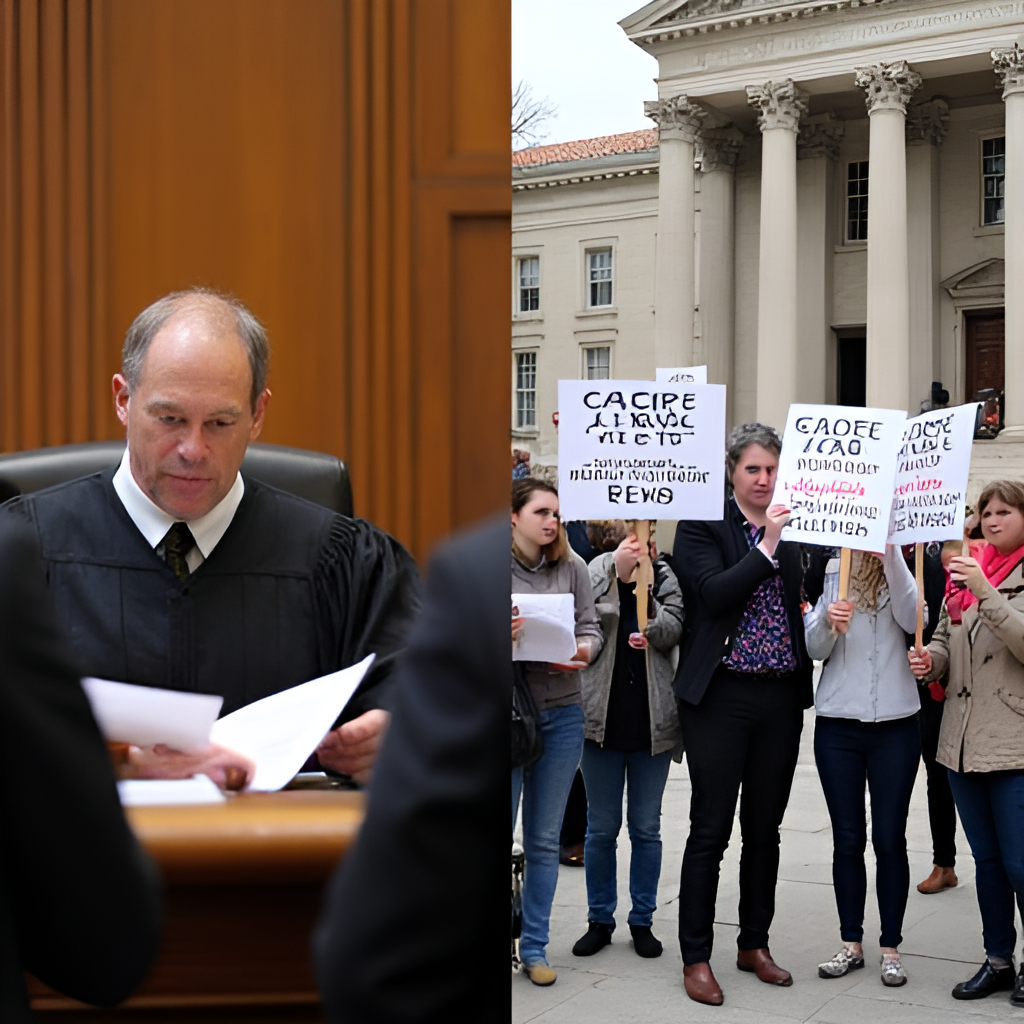
This image is a fictional image generated by GlobalTrendHub.
The ‘Free Karen Read’ Movement and Public Interest
Beyond the legal arguments, the Karen Read trial has become a cultural phenomenon, generating significant public interest and dividing opinions. The “Free Karen Read” movement has gained traction, with supporters attending court proceedings and holding rallies, convinced of her innocence and the cover-up theory. This level of public engagement is unusual for most criminal trials and adds another layer of complexity to the proceedings. It raises interesting questions about the influence of public opinion and social media on high-profile cases.
Looking Ahead: The Remaining Stages of the Trial
As the defense continues to present its case, the end of the trial is drawing nearer, though exactly when remains to be seen. Karen Read herself recently indicated outside the courthouse that the defense might rest its case as early as the following Tuesday, give or take. Once the defense rests, the prosecution may have an opportunity for rebuttal witnesses. This will be followed by closing arguments from both sides, jury instructions from Judge Beverly Cannone, and then the crucial phase of jury deliberation. The outcome, whether a conviction, acquittal, or another hung jury, will undoubtedly have significant repercussions.
Conclusion: The Significance of the Karen Read Trial
Following the Karen Read trial live offers a compelling, sometimes unsettling, look into a complex legal case with a tragic core. It highlights the adversarial nature of the justice system, the critical role of evidence and witness testimony, and the potential for differing interpretations of events. Regardless of the outcome, the Karen Read trial live has already left an indelible mark, raising questions about law enforcement conduct, the power of public narrative, and the pursuit of justice in high-profile cases. As the trial approaches its conclusion, all eyes remain on the Dedham courtroom, awaiting a verdict that will bring a legal resolution, though perhaps not closure, to this deeply scrutinized case.