
Vladimir Putin: Shaping Russia and the World
- Introduction: Understanding Vladimir Putin’s Enduring Influence
- Early Life and KGB Career: Formative Years
- From St. Petersburg to the Kremlin: Vladimir Putin’s Political Ascent
- Putin’s Leadership in Russia: Consolidation of Power and Domestic Changes
- Economic Policies and Challenges Under Putin
- Foreign Policy: Reasserting Russia’s Global Role
- Navigating Controversies and Criticisms
- The Future of Putin’s Russia
- Conclusion: The Complex Legacy of Vladimir Putin
Vladimir Putin is a figure whose leadership has profoundly influenced not only Russia but the global political landscape. Since his ascent to power in 1999, Vladimir Putin has been a central figure, shaping domestic policy and reasserting Russia’s presence on the world stage. My experience researching international relations has shown me how deeply intertwined a nation’s leader is with its trajectory, and understanding Putin’s leadership is key to grasping modern Russian history and its global implications.
To truly understand the impact of Russian President Putin, you have to look beyond the headlines and delve into his background and policies. He’s a complex figure, often described with terms like strategic, pragmatic, and authoritarian. His tenure, marked by significant reforms and international controversies, presents a multifaceted portrait of leadership that continues to be debated globally. It’s like trying to understand a chess grandmaster by only looking at the final move; you need to see the entire game board and the strategy behind each piece’s movement.
Early Life and KGB Career: Formative Years
Born on October 7, 1952, in Leningrad (now St. Petersburg), Vladimir Putin’s early life was shaped by the post-war Soviet era. He often speaks of a modest upbringing in a communal apartment. This period, I believe, instilled a certain resilience and pragmatism. After studying law at Leningrad State University, he fulfilled a long-held ambition by joining the KGB, the Soviet intelligence service. His career in the KGB, including a stint in Dresden, East Germany, was focused on foreign intelligence. This experience, spanning 16 years and reaching the rank of lieutenant colonel, undoubtedly provided him with a unique skill set in information gathering, strategy, and perhaps a certain degree of discretion and control. It’s easy to see how this background would inform his later political actions and approach to governance.
He resigned from the KGB in 1991 as the Soviet Union was collapsing. He later described this disintegration as “the greatest geopolitical catastrophe of the century,” a sentiment that profoundly influenced his drive to restore Russia’s perceived strength and influence. This period of instability and decline seems to have left an indelible mark on his political philosophy.
From St. Petersburg to the Kremlin: Vladimir Putin’s Political Ascent
Following his KGB career, Vladimir Putin entered politics in St. Petersburg, working with his former law professor, Anatoly Sobchak, who became the city’s first democratically elected mayor. This period, from 1990 to 1996, allowed him to build connections and gain administrative experience. His move to Moscow in 1996 marked a rapid ascent within the Kremlin administration under President Boris Yeltsin.
He held several key positions, including director of the Federal Security Service (FSB), the KGB’s successor. This role further solidified his ties within the security apparatus. In August 1999, Yeltsin appointed Putin as Prime Minister, and just months later, on December 31, 1999, Yeltsin unexpectedly resigned, naming Putin as acting president. This sudden transition propelled him into the country’s highest office, a pivotal moment in Russia’s post-Soviet history. He won the presidential election in March 2000, beginning his first full term.
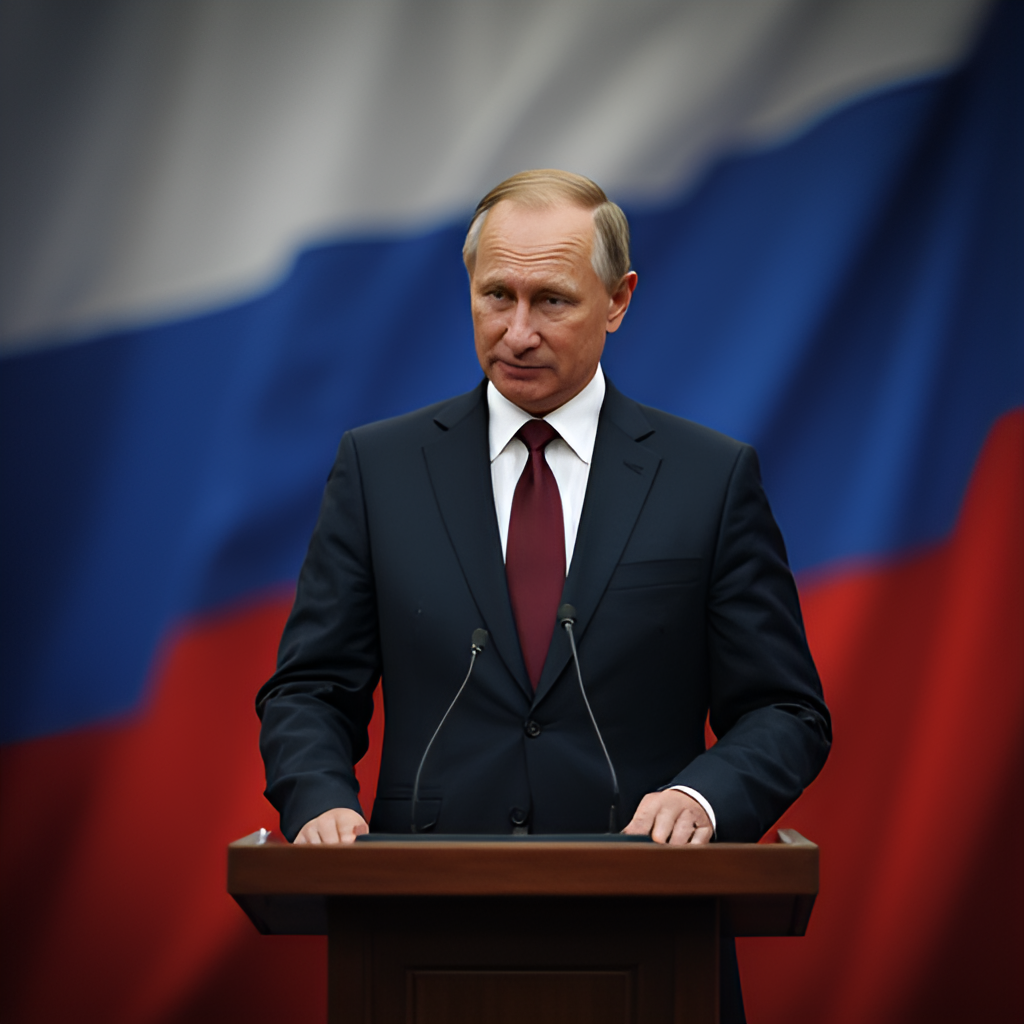
This image is a fictional image generated by GlobalTrendHub.
Putin’s Leadership in Russia: Consolidation of Power and Domestic Changes
Upon becoming president, Vladimir Putin focused on restoring stability and strengthening the central government, which had been weakened in the 1990s. He implemented policies aimed at creating a strict “vertical of power,” reasserting control over regional leaders and reducing the influence of oligarchs who had gained significant economic and political power. This centralization, some analysts argue, transformed Russia into a more authoritarian state.
His early years saw significant economic reforms, including tax restructuring and new legal codes. These, combined with rising oil and gas prices, contributed to a period of economic growth and improved living standards for many Russians. He also presided over efforts to combat organized crime and terrorism, particularly in Chechnya, which resonated with a public yearning for order.
Over time, however, critics point to a crackdown on political opposition and independent media. Constitutional amendments, notably in 2020, allowed him to potentially extend his presidency, raising concerns about the future of democratic institutions in Russia. It’s a complex picture – initial stability and economic gains coupled with increasing restrictions on civil liberties.
Putin’s Grip on Power: How it Evolved
Examining Putin’s grip on power reveals a strategic, long-term approach. Initially constitutionally limited to two consecutive terms, he served as Prime Minister from 2008 to 2012 before returning to the presidency. This maneuver, alongside constitutional changes he orchestrated, has allowed him to remain at the helm for over two decades, making him the longest-serving Russian leader since Josef Stalin. The system under the Head of the Kremlin has been described as a “personalized dictatorship” by some political scientists, where power is increasingly centralized around the president. This evolution hasn’t been without challenges, but his ability to navigate political landscapes and maintain domestic support has been a defining feature of his time in office.
Economic Policies and Challenges Under Putin
Under Vladimir Putin, Russia’s economy experienced significant shifts. The early 2000s saw robust growth, largely fueled by soaring prices for oil and gas, Russia’s key exports. This economic upswing helped repay Soviet-era debts and increased real incomes for many citizens, contributing to his popularity.
However, the economy remains heavily reliant on natural resources, making it vulnerable to price fluctuations. Lower oil prices and international sanctions, particularly following the annexation of Crimea in 2014 and the full-scale invasion of Ukraine in 2022, have led to economic challenges, including recession and stagnation. The government has also nationalized key industries, bringing a large portion of the economy under state control. While this has increased central control, it has also been linked to concerns about corruption and lack of transparency.
It’s a bit of a double-edged sword; the resource wealth provided a foundation for stability and growth, but the lack of diversification and the impact of geopolitical tensions create persistent vulnerabilities. My reading of economic analyses suggests that while initial reforms were positive, long-term structural issues remain.
Foreign Policy: Reasserting Russia’s Global Role
Vladimir Putin’s foreign policy has been characterized by a strong desire to reassert Russia’s influence on the global stage following the decline of the Soviet Union. He has pursued a more assertive approach, particularly in areas Russia considers its sphere of influence, often referred to as the “near abroad.” Military actions in Chechnya, Georgia, and most significantly, Ukraine, demonstrate a willingness to use force to achieve strategic objectives and protect perceived Russian interests.
He has also sought to challenge the unipolar world order led by the United States, advocating for a more multipolar system. This involves strengthening ties with countries like China and pursuing alternative international alliances. Russia has also become involved in conflicts further afield, such as the intervention in the Syrian civil war.
Understanding Putin’s foreign policy requires acknowledging his view of history and Russia’s place in the world. He has often invoked historical narratives to justify actions, particularly concerning Ukraine, which he views through a lens of shared history and identity. This historical perspective is a critical, and sometimes controversial, element of his foreign policy doctrine.
This image is a fictional image generated by GlobalTrendHub.
Russian President Putin on the World Stage
Russian President Putin’s actions have had a profound global impact. The annexation of Crimea in 2014 and the ongoing conflict in Ukraine have significantly altered the geopolitical landscape, leading to widespread international condemnation and sanctions against Russia. These events have strained relations with Western countries and led to a renewed focus on NATO’s role and expansion.
Beyond direct conflict, Russia under the Head of the Kremlin has been accused of interfering in the elections of other countries and engaging in disinformation campaigns, further contributing to international tensions. Russia’s role in global energy markets also gives it significant leverage on the world stage. The international community continues to grapple with how to respond to Russia’s assertive foreign policy under his long-standing leadership.
Navigating Controversies and Criticisms
Vladimir Putin’s tenure has been marked by significant controversies and widespread criticism from within Russia and internationally. Concerns about human rights, including the suppression of dissent, limitations on freedom of the press, and the treatment of political opponents, are frequently raised by international organizations and governments. The deaths of journalists and political figures who have been critical of the Kremlin have also drawn intense scrutiny.
Allegations of widespread corruption within the Russian government and state-owned enterprises are persistent. While Putin initially aimed to curb the influence of oligarchs, critics argue that a new class of elites loyal to him has emerged, benefiting from opaque systems. It’s a challenging area to assess definitively from the outside, but reports from organizations like Transparency International consistently rank Russia low on corruption indices.
The conduct of military operations, particularly in Chechnya and Ukraine, has also led to accusations of human rights abuses and violations of international law. These issues contribute to a deeply polarizing view of Putin on the world stage, with some seeing him as a strong leader who restored Russia’s pride, while others view him as an authoritarian figure who has undermined democratic norms and international stability.
The Future of Putin’s Russia
After more than two decades in power, questions about the future of Russia under Vladimir Putin, and what might follow, are increasingly relevant. The constitutional changes in 2020 have paved the way for him to potentially remain president for several more years. This raises questions about succession and the long-term stability of the political system he has built.
The system, often referred to as “Putinism,” is characterized by centralized power, a strong role for security services, and a blend of economic liberalism with state control. The impact of this system on Russia’s institutions and civil society will likely be a subject of analysis for decades to come. The ongoing conflict in Ukraine and its economic consequences also pose significant challenges for the future.
Predicting the future is always tricky, especially in politics. However, understanding the foundations of Putin’s power and the dynamics within Russia provides some clues. The emphasis on stability and national strength is likely to continue, but the country faces complex demographic, economic, and geopolitical headwinds.
Conclusion: The Complex Legacy of Vladimir Putin
In conclusion, Vladimir Putin’s impact on Russia and the world is undeniable. His rise from a KGB officer to a long-serving president has been a remarkable political journey. He has overseen a period of renewed stability and economic growth in Russia, particularly in his early years, while simultaneously centralizing power and restricting political freedoms. His foreign policy has been assertive, aiming to restore Russia’s global standing, but it has also led to significant conflicts and international isolation. Understanding Vladimir Putin requires looking at the interplay of his background, his policies, and the complex historical and geopolitical context in which he operates. As someone who has followed these developments, it’s clear that his legacy will be debated and analyzed for generations, reflecting the profound and often controversial changes that have occurred under his leadership.