
- Introduction: Understanding Sustainable Aviation Fuel (SAF)
- What Exactly is Sustainable Aviation Fuel (SAF)?
- How is Sustainable Aviation Fuel (SAF) Produced?
- The Environmental and Operational Benefits of SAF
- Navigating the Challenges: Cost, Scale, and Sustainability
- Global Initiatives Driving SAF Adoption
- The Future Outlook for Sustainable Aviation Fuel (SAF)
- Conclusion: Embracing Sustainable Aviation Fuel (SAF) for Net-Zero Aviation
Introduction: Understanding Sustainable Aviation Fuel (SAF)
Sustainable Aviation Fuel (SAF) is rapidly emerging as a critical component in the global effort to decarbonize the aviation sector, offering a viable pathway towards reducing the environmental footprint of air travel. As the world intensifies its focus on climate action and achieving ambitious net-zero targets, the aerospace industry faces immense pressure to curb its significant greenhouse gas emissions. Conventional jet fuel, derived from fossil sources, is a major contributor to this problem. SAF presents a promising alternative, produced from sustainable resources and capable of significantly lowering lifecycle carbon emissions compared to its traditional counterpart. Understanding SAF, its production methods, benefits, and challenges is crucial for appreciating its potential role in achieving environmentally responsible aviation and fostering a more sustainable future for global connectivity.
The concept of alternative fuels is not new, but the urgency driven by climate change has accelerated research, development, and deployment efforts focused specifically on aviation. Unlike ground transportation, which has viable electrification options, long-haul aviation faces unique energy density requirements that make batteries or hydrogen power challenging for widespread near-term adoption. This positions SAF, often termed `biojet fuel` or synthesized `e-fuels`, as the most feasible solution for substantial `emissions reduction` in the medium term. It acts as a “drop-in” fuel, meaning it can be blended with conventional jet fuel and used in existing aircraft engines and airport infrastructure without requiring costly modifications, facilitating a smoother transition for the entire `aerospace industry`.
What Exactly is Sustainable Aviation Fuel (SAF)?
Sustainable Aviation Fuel (SAF) is a liquid fuel used in commercial aviation that reduces lifecycle carbon emissions compared to conventional jet fuel (kerosene). The “sustainable” aspect is key: SAF must be produced from feedstocks that do not deplete natural resources, harm biodiversity, compete with food production, or cause negative social impacts. It is chemically very similar to traditional jet fuel, allowing it to be safely mixed or used directly in existing jet engines. This “drop-in” capability is a major advantage, avoiding the need for immediate, expensive overhauls of aircraft fleets and fueling infrastructure worldwide.
SAF is not a single type of fuel but rather encompasses various fuels produced through different certified pathways and from diverse feedstocks. The two main categories are:
- Biofuels: Derived from biological matter (biomass). Common feedstocks include used cooking oil, animal fats, agricultural residues (like corn stover or wheat straw), forestry waste, municipal solid waste, and dedicated energy crops grown on marginal land.
- Synthetic Fuels (e-fuels or Power-to-Liquids): Produced synthetically, typically by combining captured carbon dioxide (from industrial sources or direct air capture) with green hydrogen (produced via electrolysis powered by renewable electricity). These are often considered highly sustainable if the energy inputs are entirely renewable.
Crucially, the sustainability of SAF is assessed across its entire lifecycle – from feedstock cultivation or collection, transportation, processing, and final combustion. Rigorous certification schemes (e.g., Roundtable on Sustainable Biomaterials – RSB, International Sustainability & Carbon Certification – ISCC) are essential to verify these sustainability claims and ensure genuine `emissions reduction` without unintended negative consequences. This differentiates SAF from earlier generations of biofuels that sometimes faced criticism regarding land use change or food competition.
How is Sustainable Aviation Fuel (SAF) Produced?
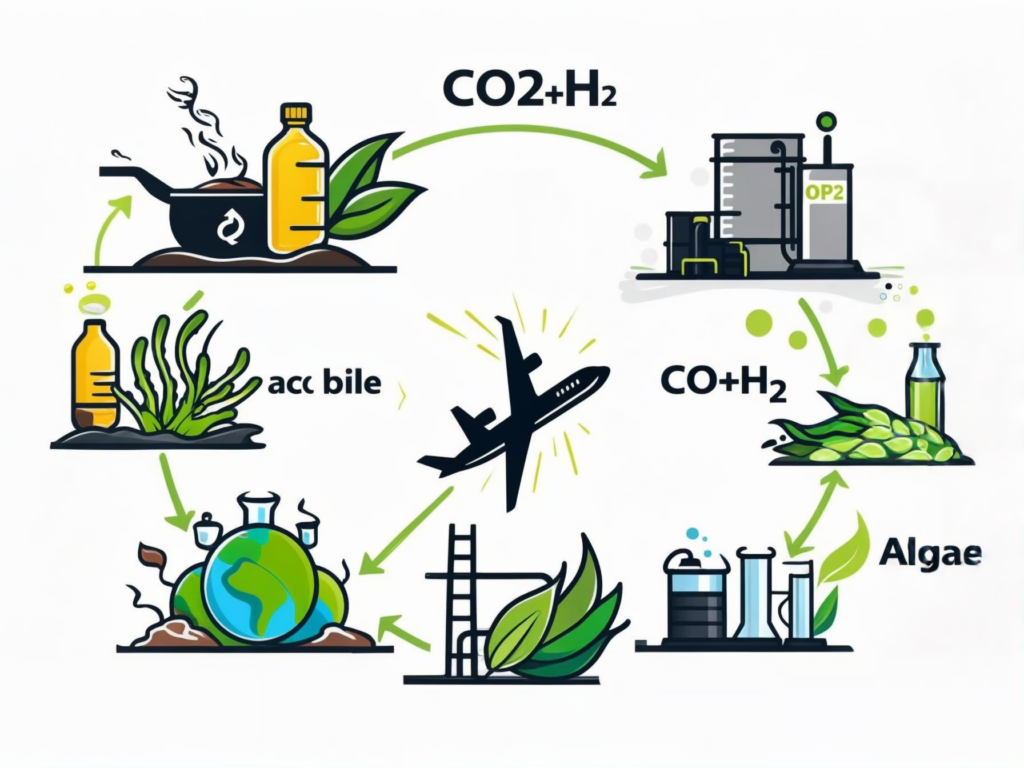
Several technological pathways have been approved for producing SAF, each utilizing different feedstocks and conversion processes. Some of the most prominent and commercially advanced pathways include:
- Hydroprocessed Esters and Fatty Acids (HEFA-SPK): This is currently the most mature and widely used pathway. It processes vegetable oils (like used cooking oil), waste animal fats, or certain plant oils (e.g., camelina, carinata) using hydrogen to produce a fuel chemically similar to kerosene. This is often referred to as `biojet fuel`.
- Alcohol-to-Jet Synthetic Paraffinic Kerosene (ATJ-SPK): This pathway converts alcohols, such as ethanol (often derived from corn or sugarcane) or isobutanol (produced via fermentation of sugars or biomass), into jet fuel through dehydration, oligomerization, and hydrogenation steps.
- Fischer-Tropsch Synthetic Paraffinic Kerosene (FT-SPK): This versatile process converts syngas (a mixture of hydrogen and carbon monoxide) into liquid hydrocarbons. The syngas can be produced from gasifying biomass (Biomass-to-Liquids or BTL) or municipal solid waste, or by combining green hydrogen with captured CO2 (Power-to-Liquids or PtL, producing `e-fuels`).
- Other Pathways: Ongoing research explores pathways like catalytic hydrothermolysis (CH, using wet biomass like algae) and direct sugar-to-hydrocarbon (DSHC) conversion.
The choice of pathway often depends on regional feedstock availability, technological maturity, and economic viability. Feedstock logistics and ensuring a truly sustainable supply chain remain significant challenges. For instance, reliance solely on used cooking oil is limited by collection volumes, while scaling up energy crops requires careful consideration of land use impacts. `E-fuels`, while potentially highly sustainable, currently require vast amounts of renewable electricity and captured CO2, making them expensive and dependent on advancements in hydrogen production and carbon capture technologies. Diversifying production pathways and feedstocks is crucial for scaling up SAF supply reliably and sustainably.
The Environmental and Operational Benefits of SAF
The primary driver for adopting Sustainable Aviation Fuel (SAF) is its significant potential for `emissions reduction`. Compared to fossil jet fuel, SAF can lower lifecycle greenhouse gas emissions by up to 80%, depending on the feedstock, production pathway, and supply chain logistics. This reduction considers the entire process, including potential emissions from land use change (for biofuels) or the carbon intensity of electricity used (for e-fuels).
Beyond carbon reduction, SAF offers other notable benefits:
- Improved Air Quality: SAF typically contains fewer aromatic compounds and sulfur than conventional jet fuel. Burning SAF results in lower emissions of particulate matter (soot) and sulfur oxides (SOx), contributing to better air quality around airports.
- Drop-in Compatibility: As mentioned, SAF meets stringent aviation fuel specifications (like ASTM D7566) and can be blended up to 50% (and sometimes higher in tests) with conventional Jet A or Jet A-1 fuel. This allows airlines and airports to integrate SAF seamlessly into existing operations without modifying aircraft or infrastructure.
- Energy Security: Developing domestic SAF production capabilities can reduce reliance on imported fossil fuels, enhancing national energy security for many countries.
- Economic Development: Establishing SAF supply chains can create new economic opportunities, particularly in rural areas through feedstock cultivation and collection, and in biorefinery construction and operation.
These combined benefits make SAF a cornerstone of the `aerospace industry`’s strategy for achieving `aviation decarbonization` and aligning with global climate goals towards `net-zero aviation` by mid-century. While not a silver bullet, it’s the most promising lever for reducing the climate impact of flying in the coming decades.
Navigating the Challenges: Cost, Scale, and Sustainability
Despite its clear benefits, the widespread adoption of Sustainable Aviation Fuel (SAF) faces significant hurdles:
- Cost Premium: Currently, SAF is typically 2 to 5 times more expensive than conventional fossil jet fuel. This price gap stems from complex production processes, limited economies of scale, and fluctuating feedstock costs. Reducing this premium is critical for making SAF economically viable for airlines operating on thin margins.
- Scalability and Production Volume: Global SAF production is still a tiny fraction (less than 1%) of total aviation fuel consumption. Scaling up production to meet even a fraction of the projected demand requires massive investments in new biorefineries and infrastructure, alongside securing vast quantities of sustainable feedstocks.
- Feedstock Availability and Sustainability Assurance: Ensuring a sufficient supply of genuinely sustainable feedstocks is perhaps the biggest challenge. Competition for resources like used cooking oil exists, and scaling up energy crops or biomass collection must avoid negative impacts like deforestation, biodiversity loss, or competition with food production. Robust certification and tracking systems are essential but add complexity and cost. The development of `e-fuels` faces bottlenecks in renewable energy capacity and green hydrogen production costs.
- Policy and Regulatory Support: Consistent, long-term policy support is needed to de-risk investments and stimulate demand. This includes blending mandates (requiring airlines to use a certain percentage of SAF), financial incentives (like tax credits or subsidies), carbon pricing mechanisms, and public funding for research and development. Harmonizing policies across different regions is also important for the global aviation market. See related policies here.
Addressing these challenges requires a concerted effort from governments, the `aerospace industry`, fuel producers, investors, and researchers. Collaboration is key to accelerating technological innovation, building resilient supply chains, and creating the necessary market conditions for SAF to reach its full potential in `aviation decarbonization`.
Global Initiatives Driving SAF Adoption
Recognizing the critical role of SAF, numerous international bodies, governments, and industry groups have launched initiatives to accelerate its development and uptake:
- ICAO’s CORSIA: The Carbon Offsetting and Reduction Scheme for International Aviation (CORSIA), under the UN’s International Civil Aviation Organization (ICAO), allows airlines to use eligible SAF to reduce their offsetting requirements, creating a compliance market demand. ICAO is also working on a long-term aspirational goal (LTAG) for aviation decarbonization, heavily reliant on SAF. IATA provides insights on SAF.
- ReFuelEU Aviation: The European Union has established binding mandates requiring fuel suppliers to blend increasing percentages of SAF into the jet fuel supplied at EU airports, starting in 2025 and ramping up significantly towards 2050. It also includes specific sub-mandates for `e-fuels`.
- US SAF Grand Challenge: The United States has set a goal to produce 3 billion gallons of SAF per year by 2030 and meet 100% of projected domestic aviation jet fuel demand with SAF by 2050. This initiative involves coordination across government agencies and provides incentives like the Blender’s Tax Credit.
- National Mandates and Targets: Several other countries, including the UK, Japan, Canada, and Singapore, have implemented or are developing their own SAF targets, mandates, or support policies.
- Airline and Corporate Commitments: Many major airlines, airports, and large corporations (through sustainable business travel programs) have committed to purchasing significant volumes of SAF, investing in SAF producers, or joining alliances like the World Economic Forum’s Clean Skies for Tomorrow coalition to drive demand and investment.
These collective efforts create crucial market signals, foster investment confidence, and build momentum towards scaling up the global `sustainable aviation fuel` supply chain, pushing the industry closer to its `net-zero aviation` ambitions.
The Future Outlook for Sustainable Aviation Fuel (SAF)
The future of **Sustainable Aviation Fuel (SAF)** looks promising, albeit challenging. Continued technological innovation is expected to improve the efficiency and reduce the cost of existing production pathways while bringing newer methods – like those using algae or advanced cellulosic feedstocks – to commercial maturity. The development and scaling of `e-fuels` are particularly critical for the long term, offering a pathway potentially less constrained by biomass availability, provided renewable energy and green hydrogen production scales sufficiently and becomes cost-competitive.
Policy will remain a key driver. As blending mandates become more ambitious and carbon pricing mechanisms strengthen, the economic case for SAF will improve. International cooperation through bodies like ICAO will be essential for ensuring a level playing field and harmonized sustainability criteria globally. Investment in R&D, infrastructure, and feedstock development needs to accelerate significantly.
However, it’s important to recognize that SAF is part of a broader suite of solutions for `aviation decarbonization`. While it’s the primary tool for reducing emissions from existing aircraft types in the short to medium term, long-term efforts also include developing radically new aircraft technologies (hydrogen-powered or electric aircraft for shorter routes), improving operational efficiencies (optimized flight paths, air traffic management), and potentially exploring market-based measures more extensively. The ultimate goal of `net-zero aviation` will likely require a combination of all these approaches, with **Sustainable Aviation Fuel (SAF)** playing a central and indispensable role for decades to come.
Conclusion: Embracing Sustainable Aviation Fuel (SAF) for Net-Zero Aviation
In summary, **Sustainable Aviation Fuel (SAF)** stands as a cornerstone technology in the vital mission of `aviation decarbonization`. Offering significant lifecycle `emissions reduction` potential and compatibility with existing aircraft and infrastructure, SAF provides the most viable path for reducing the climate impact of air travel in the near to medium term. While substantial challenges related to cost, production scale, and ensuring feedstock sustainability persist, concerted efforts from governments, the `aerospace industry`, fuel producers, and researchers are paving the way forward. Global initiatives, blending mandates, and increasing investment signal a growing commitment to overcoming these hurdles. Achieving `net-zero aviation` by mid-century requires a multi-faceted approach, but embracing and accelerating the development and deployment of **Sustainable Aviation Fuel (SAF)** is undoubtedly critical to reaching that ambitious yet necessary goal.