
AMZN: Decoding Amazon Stock – What Investors Need to Know
- Introduction to the World of AMZN Stock
- Understanding Amazon’s Diverse Business Segments
- Recent AMZN Stock Performance and Historical Trends
- Key Factors Influencing AMZN Stock Price
- AMZN Stock Forecasts and Analyst Predictions
- How to Invest in AMZN Stock
- Risks and Considerations When Investing in AMZN
- The Future Outlook for AMZN Stock
AMZN: decoding Amazon stock is something many investors are trying to do as they navigate the complexities of the market. As someone who’s followed the tech sector for years, I’ve seen firsthand how Amazon, trading under the ticker AMZN, has grown from an online bookseller into a global behemoth. It’s truly fascinating how this company has woven itself into the fabric of our daily lives, from how we shop to how businesses operate in the cloud. In this article, we’ll explore what makes Amazon stock tick and what potential investors should consider.
Amazon.com Inc. (AMZN) is a global leader in e-commerce and cloud computing, but its reach extends far beyond that. When you consider the sheer scale of their operations and their constant push into new areas, it’s no wonder that decoding Amazon stock feels like a necessary exercise for anyone interested in the stock market.
Understanding Amazon’s Diverse Business Segments
One of the key reasons for Amazon’s immense valuation and influence lies in its diversified business model. It’s not just about online shopping anymore; they’ve strategically built several powerful engines of growth. Amazon officially segments its operations into three main areas: North America, International, and Amazon Web Services (AWS).
The North America and International segments primarily cover their vast retail operations, encompassing everything from online stores to physical locations like Whole Foods Market. This is what most people think of when they hear “Amazon” – the place where you can buy almost anything and have it delivered quickly. My own experience, like many others, involves frequent Amazon orders, which really underscores the dominance of their retail presence.
However, the real powerhouse in terms of profitability is Amazon Web Services (AWS). AWS provides cloud computing services to businesses and individuals worldwide, offering everything from storage to machine learning tools. It’s been a game-changer for countless companies, enabling them to scale and innovate without massive infrastructure investments. According to recent data, AWS holds a significant share of the global cloud infrastructure market, competing primarily with Microsoft Azure and Google Cloud. This segment consistently generates a substantial portion of Amazon’s operating income.

This image is a fictional image generated by GlobalTrendHub.
Beyond these core segments, Amazon also has significant and growing revenue streams from advertising, subscription services like Amazon Prime, and even physical stores. This multi-pronged approach provides a level of resilience and multiple avenues for future expansion, which is a crucial factor when decoding Amazon stock.
Recent AMZN Stock Performance and Historical Trends
Looking at the historical performance of Amazon stock (AMZN) reveals a remarkable growth story. Since its IPO in 1997, the stock has seen incredible appreciation. While past performance is never a guarantee of future results, understanding this history is vital for investors. I remember watching the stock climb over the years, initially with skepticism about their profitability, but eventually realizing the sheer scale of their vision and execution.
In recent times, like many tech stocks, AMZN has experienced periods of volatility. The market is constantly reacting to economic conditions, company performance, and broader industry trends. For instance, the stock reached an all-time high in early 2025. However, it’s also seen pullbacks due to various factors, including macroeconomic concerns and competitive pressures.
Tracking the AMZN stock price on a daily basis shows these fluctuations, influenced by everything from earnings reports to global events. Understanding these trends, both short-term and long-term, is part of the process of decoding Amazon stock and its potential trajectory.
Key Factors Influencing AMZN Stock Price
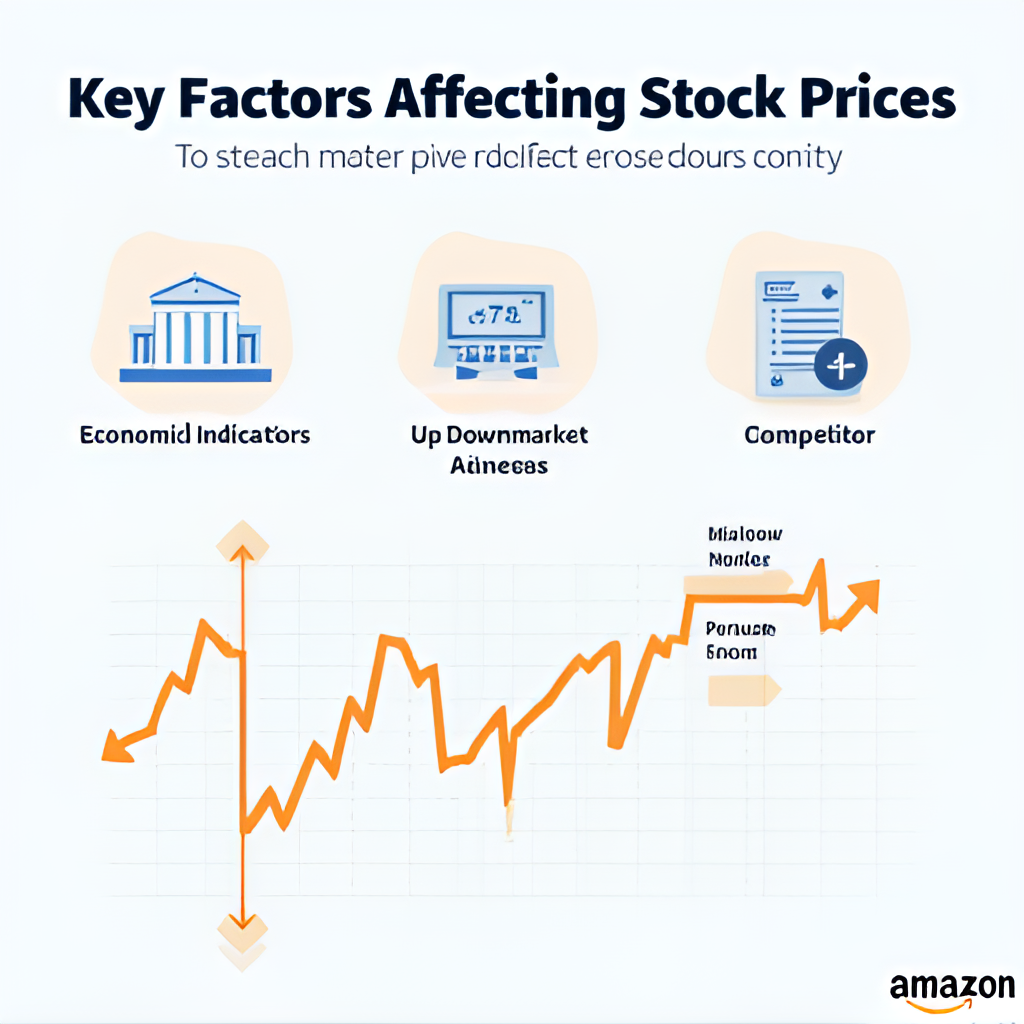
Several factors can significantly impact the price of AMZN stock. Company performance is, of course, paramount. Earnings reports, revenue growth (especially in key segments like AWS), and profitability metrics are closely watched by investors.
Market trends also play a crucial role. The health of the e-commerce market, the growth of cloud computing, and the competitive landscape in these sectors all influence investor sentiment. For example, the e-commerce market continues to grow globally, but the pace and specific trends within it, such as the rise of social commerce and personalized subscriptions, can affect Amazon’s retail performance.
Macroeconomic factors like interest rates, inflation, and overall economic growth also weigh on AMZN stock. During economic downturns, consumer spending might decrease, impacting Amazon’s retail sales. Geopolitical factors and regulatory concerns, particularly for large tech companies, can also introduce uncertainty and volatility.
This image is a fictional image generated by GlobalTrendHub.
Investor sentiment itself is a powerful, albeit sometimes irrational, factor. Positive news or analyst upgrades can drive the price up, while negative headlines or market-wide fear can lead to selloffs. Decoding Amazon stock requires considering this blend of fundamental performance and market psychology.
AMZN Stock Forecasts and Analyst Predictions
Given Amazon’s complexity and market position, analysts frequently offer price targets and forecasts for AMZN stock. It’s important to remember that these are just predictions based on their models and assumptions, and they can vary. However, they do provide valuable insights into market expectations.
Many analysts currently have a positive outlook on Amazon, with a consensus often leaning towards a “Strong Buy” rating. Average price targets for the next 12 months suggest a notable upside potential from the current price.
These forecasts are typically based on projected revenue and earnings growth, particularly the continued strength of AWS and potential in areas like advertising and artificial intelligence. However, analysts also consider the risks, such as increased competition, potential regulatory challenges, and the impact of global economic conditions.
For instance, some forecasts extend several years out, projecting continued growth in Amazon’s share price, though acknowledging potential volatility along the way. Keeping an eye on a range of these predictions can be helpful when you’re trying to get a sense of the market’s expectations for AMZN.
How to Invest in AMZN Stock
If, after decoding Amazon stock and its various facets, you decide you want to invest, the process is relatively straightforward. The most common way is through a brokerage account. You can open an account with an online broker, deposit funds, and then place an order to buy shares using the ticker symbol AMZN.
Amazon also has a direct stock purchase plan, which is another avenue for investment. For those who prefer a more diversified approach, investing in exchange-traded funds (ETFs) or mutual funds that include AMZN as one of their holdings is also an option.
It’s worth noting that Amazon completed a stock split in 2022, which significantly reduced the per-share price, making it more accessible to individual investors. When buying, you’ll typically choose between a market order (buying at the current market price) or a limit order (setting a specific price you’re willing to pay).
Investing in Amazon stock, like any investment, requires careful consideration and understanding of your own financial goals and risk tolerance. It’s not just about clicking a button; it’s about making an informed decision.
Risks and Considerations When Investing in AMZN
No investment is without risk, and AMZN stock is no exception. While Amazon has demonstrated remarkable growth and resilience, there are important factors to consider before investing. Increased competition across all of Amazon’s business segments is a significant risk. In e-commerce, they face rivals like Walmart and Alibaba, while in cloud computing, Microsoft Azure and Google Cloud are strong contenders.
Profit potential and revenue growth uncertainty are also risks. While AWS is highly profitable, the retail segment often operates on thinner margins. Maintaining growth at Amazon’s scale is a constant challenge, and any slowdown could impact the stock price.
Speculative valuation and share price volatility are inherent in a high-growth stock like AMZN. The market’s expectations for future performance are often priced into the stock, and if those expectations aren’t met, it can lead to significant price drops.
Geopolitical factors and regulatory scrutiny are also potential headwinds. Governments around the world are increasingly examining the power and influence of large tech companies, which could lead to new regulations or antitrust challenges. My personal take is that these regulatory discussions will likely continue to be a source of uncertainty for large tech firms like Amazon.
Finally, broader economic conditions, such as the threat of a global recession, can impact consumer and business spending, affecting Amazon’s various divisions.
The Future Outlook for AMZN Stock
Decoding Amazon stock reveals a company with a powerful and diversified business model, a history of innovation, and significant growth potential, particularly in AWS and advertising. However, it also highlights notable risks, including intense competition, regulatory challenges, and market volatility. My experience in observing the tech landscape suggests that while Amazon is well-positioned, navigating these challenges will be crucial for its future stock performance.
Analyst forecasts generally remain positive, anticipating continued growth, but investors should always conduct their own research and consider their individual risk tolerance. Investing in AMZN means believing in Amazon’s ability to execute on its strategies, adapt to changing market dynamics, and overcome potential headwinds.
Amazon’s official website provides a wealth of information for those looking to understand the company better. Ultimately, whether AMZN stock is the right investment for you depends on your personal investment goals and how you weigh the opportunities against the risks. It’s a stock that demands attention and a thoughtful approach.