
NVDA Earnings Date: What Investors Need to Know
- Introduction: Why the NVDA Earnings Date is a Big Deal
- Understanding the NVIDIA Earnings Announcement Cycle
- Key Metrics to Watch in NVIDIA’s Financial Results
- Past NVDA Earnings Reports and Stock Volatility
- Analyst Expectations Ahead of the NVIDIA Quarterly Report
- Looking Ahead: Navigating the Next NVDA Earnings Date
- Conclusion: The Continued Importance of the NVDA Earnings Date
The NVDA earnings date is a critical moment for investors, market watchers, and frankly, anyone paying attention to the tech sector’s pulse. Having followed NVIDIA for years, I can tell you that their quarterly reports often send ripples, if not waves, across the entire market. It’s not just about how well one company did; it’s seen as a bellwether for the artificial intelligence (AI) boom and the broader technology landscape . When the NVDA earnings date rolls around, the anticipation is palpable.
In this article, we’ll dive deep into why this specific date on the financial calendar holds so much sway. We’ll explore the mechanics of the NVIDIA earnings announcement, what key figures and management commentary investors are scrutinizing, look back at how past reports have impacted the stock, and discuss what analysts are forecasting for the upcoming results. Whether you’re a seasoned investor or just curious about the forces moving the market, understanding the significance of the NVDA earnings date is essential.
Understanding the NVIDIA Earnings Announcement Cycle
So, how does the whole NVIDIA earnings announcement process actually work? It typically follows a predictable pattern each quarter. First, the company announces the specific date and time for the release of its financial results. This is usually “after market close” (AMC), meaning the information hits the wire once the trading day is over, often around 4:20-4:30 PM Eastern Time . This timing is strategic, giving investors and analysts time to digest the news before the next trading session begins.
Immediately following the earnings release, NVIDIA usually hosts a conference call. This call includes prepared remarks from key executives, such as CEO Jensen Huang and CFO Colette Kress, detailing the quarterly performance and providing guidance for the next quarter and sometimes the full fiscal year . This is often followed by a Q&A session where financial analysts and institutional investors can ask questions. Listening to this call can offer invaluable context and insights beyond the raw numbers. From my experience watching these, the tone and guidance provided are often just as impactful, if not more so, than the reported figures themselves.
It’s worth noting that the exact NVIDIA quarterly report date isn’t always locked in far in advance, though financial sites often provide forecasted dates based on historical trends . Keeping an eye on NVIDIA’s official investor relations website is the best way to get the confirmed date .
Key Metrics to Watch in NVIDIA’s Financial Results
When the NVIDIA financial results are released, what numbers really matter? Given NVIDIA’s dominance in the AI and data center space, several key metrics are under intense scrutiny. Here are some I always pay close attention to:
- Revenue: Of course, the top line is crucial. Investors want to see continued strong growth, particularly in the Data Center segment, which has been the primary engine of NVIDIA’s recent explosive performance . Forecasts for revenue are a major point of anticipation .
- Earnings Per Share (EPS): This is a widely cited profitability metric. Both GAAP (Generally Accepted Accounting Principles) and non-GAAP EPS are reported. Analysts provide consensus EPS forecasts, and beating or missing this number can significantly impact the stock price .
- Data Center Revenue: This segment is the star. Its growth rate and absolute numbers reflect the health of AI and cloud infrastructure spending globally. Record revenues in this area have become almost expected .
- Gross Margin: This shows how efficiently NVIDIA is producing its goods. A higher gross margin indicates strong pricing power and cost management. A dip can sometimes signal increased production costs or shifts in product mix .
- Guidance (Outlook): Perhaps the most forward-looking metric, management’s forecast for the *next* quarter’s revenue and profitability is absolutely critical . Strong guidance signals confidence in future demand and often has a greater impact on the stock than past results.
- Gaming Revenue: While overshadowed by Data Center, the Gaming segment was historically NVIDIA’s core business and remains significant. Its performance provides insight into the consumer market and demand for their GPUs in PCs and consoles .
Other factors like operating expenses, net income, and cash flow are also important, but in recent quarters, the focus has undeniably been on Data Center growth and forward guidance. It’s a testament to how much the AI narrative has come to define NVIDIA.
Past NVDA Earnings Reports and Stock Volatility
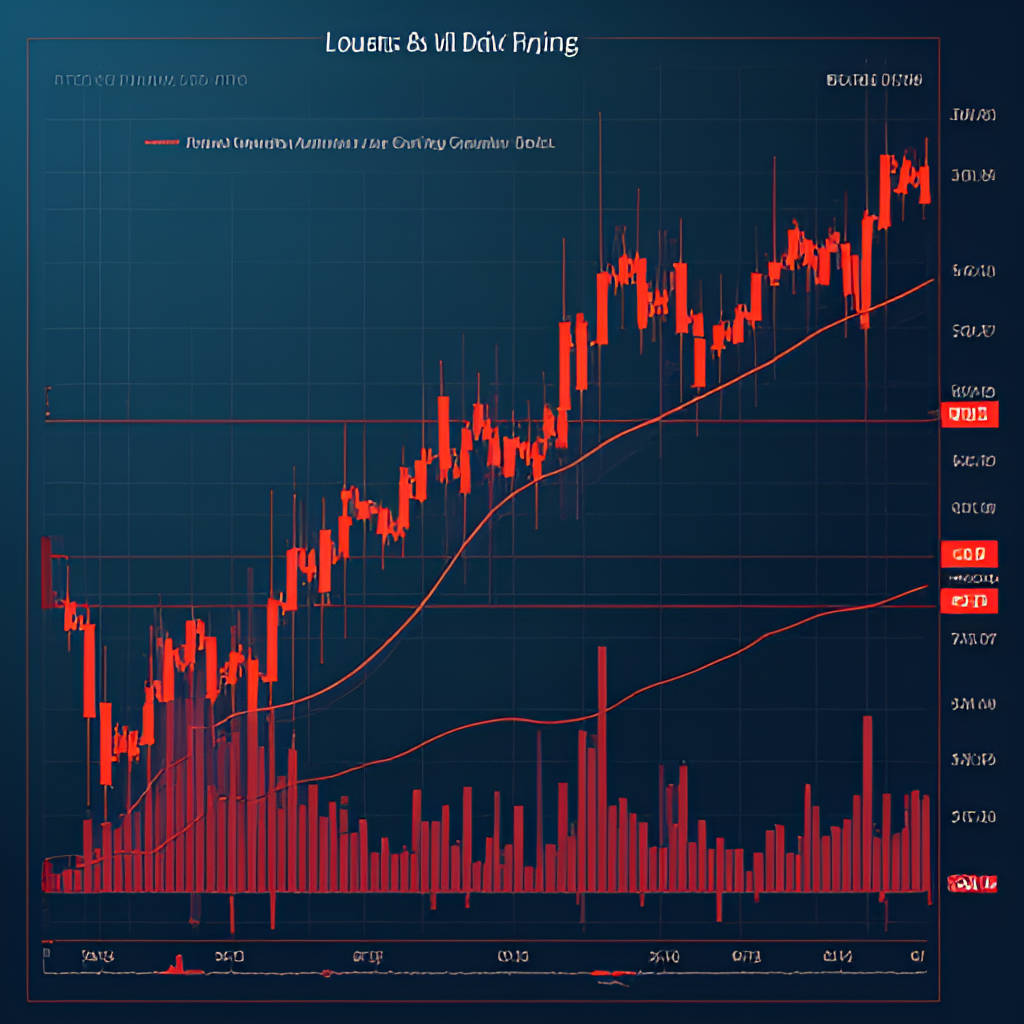
Looking back at previous NVDA earnings reports reveals a pattern of significant post-earnings stock movement, though not always in the direction you might expect based purely on whether they “beat” expectations. For example, after reporting Q1 FY25 results in May 2024, the stock popped over 9% the day after the announcement . This was tied to blowing past expectations and announcing a 10-for-1 stock split .
However, the three subsequent reports in FY25 (Q2, Q3, Q4) saw the stock fall the day after earnings, despite the company continuing to beat estimates on revenue and EPS . This highlights a crucial point: beating expectations isn’t always enough when those expectations are already sky-high. The market is often priced for perfection, and sometimes even incredible growth isn’t *fast enough* to satisfy investor appetite, or other factors like China export restrictions or gross margin concerns weigh heavily .
This image is a fictional image generated by GlobalTrendHub.
This history of volatility underscores why the NVDA earnings date is such a high-stakes event. Traders and investors try to anticipate the reaction, leading to increased option trading and potential for large price swings . My personal approach has always been to understand that while a beat or a miss provides a clear headline, the devil is truly in the details – the guidance, the segment breakdown, and the commentary from management are what paint the fuller picture.
Analyst Expectations Ahead of the NVIDIA Quarterly Report
Ahead of each NVIDIA quarterly report, Wall Street analysts publish their forecasts for revenue, EPS, and other key metrics. These consensus estimates provide a benchmark against which the actual results are measured . For Q1 FY26, which was expected around May 28, 2025, analysts were projecting significant year-over-year growth, though the pace was expected to slow compared to the previous year’s explosive increases .
Analyst commentary leading up to the report often focuses on specific themes. For instance, discussions around the Q1 FY26 report highlighted the continued strength of AI demand, potential impacts from U.S. export restrictions to China, the ramp-up of new products like the Blackwell architecture, and overall market sentiment . Analysts often have price targets for the stock, and these are sometimes updated after the earnings release based on the new information . While many analysts maintain a “Strong Buy” or “Outperform” rating on NVDA, some express caution regarding the sustainability of its growth trajectory or potential geopolitical headwinds .
It’s fascinating to see the range of analyst opinions. Some remain incredibly bullish, citing the insatiable demand for AI processing power, while others point to valuation concerns or the challenges of maintaining such rapid growth . This divergence of views contributes to the uncertainty and potential volatility surrounding the earnings date.
Looking Ahead: Navigating the Next NVDA Earnings Date
So, with the next nvda earnings date approaching (as of late May 2025, Q1 FY26 results were imminent ), what should investors be thinking about? Firstly, acknowledge the high expectations. NVIDIA has set an incredibly high bar with its recent performance, driven almost entirely by the data center boom . Meeting or slightly exceeding these expectations might not be enough for the stock to move significantly higher, as much of the good news could already be “baked in” to the current share price .
This image is a fictional image generated by GlobalTrendHub.
Pay close attention to the guidance for the next quarter (Q2 FY26). Any signs of acceleration or deceleration in the growth rate, particularly in the Data Center segment, will be heavily scrutinized . Also, listen for commentary on specific market dynamics, such as demand trends from hyperscalers (major cloud providers), enterprise adoption of AI, and any updates regarding the impact of export restrictions or competition in the China market . Commentary on gross margins and operating expenses will also be important for assessing profitability .
For me, the conference call is where the real colour comes in. Hearing Jensen Huang’s perspective on the industry and NVIDIA’s positioning can be incredibly insightful. It’s not just about the numbers; it’s about the narrative and the vision for the future . Don’t just read the headline numbers; dive into the full earnings release and listen to the call if possible. NVIDIA’s investor relations website is the official source for all these materials .
Conclusion: The Continued Importance of the NVDA Earnings Date
In conclusion, the NVDA earnings date remains one of the most significant events on the financial calendar. It’s a moment when NVIDIA pulls back the curtain on its performance, offering crucial insights not just into the company itself, but into the health and trajectory of the entire AI industry. As someone who’s watched the market react to these announcements repeatedly, I can attest to their power to drive volatility and shape sentiment.
Understanding the key metrics, past performance trends, and analyst expectations surrounding the NVIDIA earnings announcement is vital for making informed decisions. While future results are never guaranteed, the information provided on the NVDA earnings date offers the clearest look we get into the company’s operational success and future outlook. It’s a date every serious tech investor should have marked on their calendar.